Solutions for soil contamination: bioremediation and phytoremediation
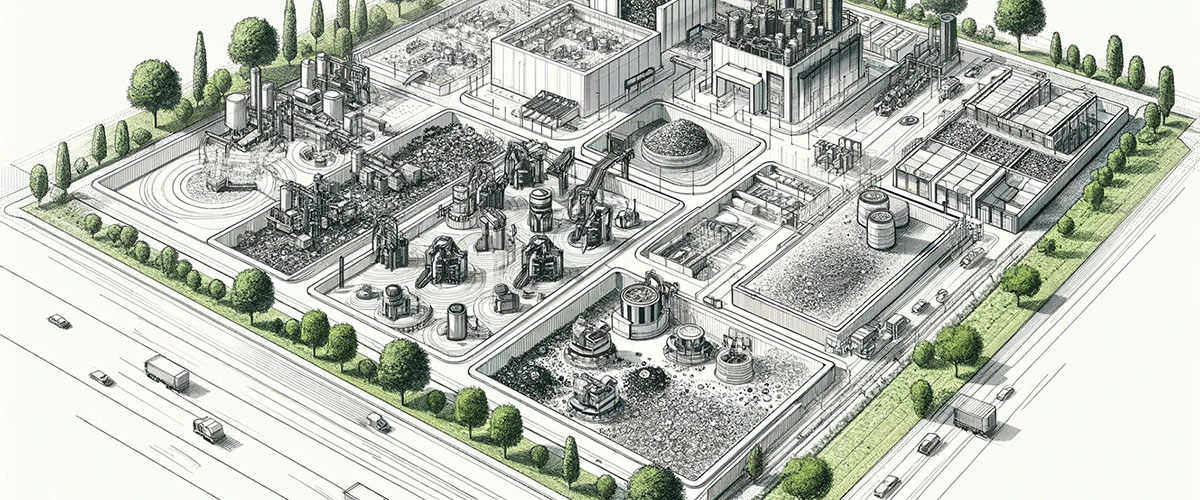
Solutions for these types of soil contamination are classified into three broad families: biological techniques (bioremediation, phytoremediation), physicochemical techniques (soil washing, stabilization, solidification, in-situ chemical oxidation) and thermal techniques (thermal desorption, incineration, vitrification). Bioremediation employs native or inoculated microorganisms that degrade organic contaminants (hydrocarbons, solvents, pesticides) through aerobic or anaerobic metabolic pathways. In soils contaminated by petroleum hydrocarbons, biostimulation (addition of NPK nutrients in a 100:10:1 ratio of C:N:P and forced aeration at 5-15 m³ of air per m³ of soil per hour) degrades between 80% and 95% of total petroleum hydrocarbons (TPH) in 6 to 18 months, at costs of 30 to 100 EUR/m³ of treated soil, compared to 150 to 500 EUR/m³ for excavation and disposal in a secure landfill (EPA, 2021). Bioaugmentation, which inoculates specialized bacterial consortia (Pseudomonas, Rhodococcus, Mycobacterium) at densities of 10⁶ to 10⁸ CFU/g of soil, accelerates degradation by 30% to 50% compared to biostimulation alone, proving especially effective for recalcitrant high-molecular-weight PAH compounds (fluoranthene, pyrene, benzo[a]pyrene).
Phytoremediation uses vascular plants to extract, stabilize or degrade soil contaminants. Phytoextraction of heavy metals employs hyperaccumulators such as Thlaspi caerulescens (zinc: up to 40,000 mg/kg dry matter; cadmium: up to 3,000 mg/kg), Brassica juncea (lead: up to 3,500 mg/kg with EDTA addition), and Pteris vittata (arsenic: up to 23,000 mg/kg). One 3 to 6 month cultivation cycle on soil containing 500 mg/kg of zinc reduces the concentration by 50 to 100 mg/kg, meaning 5 to 15 cycles (3 to 8 years) are needed to reach intervention levels. The cost of phytoremediation is 5 to 40 EUR/m³, an order of magnitude lower than conventional techniques, but its main limitation is time. Rhizofiltration (using roots of aquatic plants such as Eichhornia crassipes and Lemna minor) reduces heavy metal concentrations in contaminated water: lead (-95% in 72 hours with water hyacinth at a density of 200 g/m²), cadmium (-85% in 96 hours) and chromium (-80% in 120 hours). These solutions for soil and water contamination represent documented sustainable alternatives with more than 3,000 pilot and full-scale projects in the EPA's CLU-IN database.
Solutions for atmospheric and industrial contamination
Solutions for these types of atmospheric contamination operate at three levels: source prevention (fuel substitution, energy efficiency, process redesign), point-of-emission capture (filters, scrubbers, catalysts) and diffuse remediation (photocatalytic surfaces, vegetative barriers). The Industrial Emissions Directive 2010/75/EU requires the application of Best Available Techniques (BAT) documented in BREF (Best Available Techniques Reference Documents), with binding emission limit values. The results are quantifiable: SO₂ emissions in the EU-27 were reduced by 94% between 1990 and 2022 (from 26 million tonnes to 1.5 million), NOₓ by 65% (from 17 to 6 million tonnes), and PM2.5 particles by 33% (European Environment Agency, 2023). Capture technologies include bag filters (particle retention efficiency of 99.9% for PM greater than 1 µm, operating cost: 1 to 3 EUR per 1,000 m³ of treated gas), electrostatic precipitators (efficiency of 99% for PM, power consumption: 0.2 to 0.5 kWh per 1,000 m³), wet flue gas desulfurization (elimination of 95% to 99% of SO₂, producing gypsum as a byproduct: 2.5 tonnes per tonne of SO₂ removed) and selective catalytic reduction of NOₓ with urea (elimination of 90% to 95%, urea consumption: 0.8 kg per kg of NOₓ reduced).
At the urban scale, photocatalytic surfaces with TiO₂ (titanium dioxide) constitute a solution for diffuse air contamination. Photocatalytic pavements (TiO₂ applied at 3-5% in the surface layer of concrete) decompose NOₓ under ultraviolet radiation at rates of 2 to 8 mg/m² per hour, equivalent to a 20% to 40% reduction in NO₂ concentration in street canyon configurations (height-to-width ratio greater than 1.5) according to measurements on Borgo Palazzo street in Bergamo (Italy, 2006). Urban vegetative barriers (rows of trees with dense canopies: Platanus hispanica, Tilia cordata, Quercus ilex) reduce PM10 concentrations by 15% to 40% in the sheltered downwind zone, with deposition rates of 10 to 50 g of particles per m² of leaf surface per year (Nowak et al., 2013). Green roofs and facades further contribute: one square meter of extensive green roof captures between 10 and 20 g of PM10 per year, while green facades with evergreen climbers (Hedera helix) capture between 4 and 8 g of PM10 per m² of leaf surface per year. These solutions for atmospheric contamination complement source reduction measures with a green infrastructure approach that simultaneously improves air quality and urban livability.
Solutions for water contamination and microplastics
Solutions for these types of water contamination encompass conventional treatment (physicochemical and biological), advanced treatment (membranes, advanced oxidation, activated carbon adsorption) and natural systems (constructed wetlands, green filters). Activated sludge biological treatment, standard across the EU's 18,000 wastewater treatment plants, removes 95% of BOD₅, 90% of suspended solids and 70% to 85% of total nitrogen (Directive 91/271/EEC). For emerging contaminants (pharmaceuticals, microplastics, PFAS), tertiary treatments are required: ozonation (dose of 5 to 15 mg O₃/l, contact time of 10 to 20 minutes) degrades 90% to 99% of pharmaceutical micropollutants; granular activated carbon filtration (empty bed contact time: 15 to 30 minutes, service life: 1 to 3 years) retains 80% to 95% of adsorbable microcontaminants; and ultrafiltration membranes (pore size: 0.01 to 0.1 µm) retain 99% of microplastics larger than 10 µm. The cost of tertiary treatment is estimated at 0.05 to 0.20 EUR/m³, a 10% to 30% increase over the cost of conventional secondary treatment.
Biochar filters represent an emerging low-cost solution for diffuse water contamination. Biochar, produced by pyrolysis of residual biomass (pruning wood, rice husks, sewage sludge) at 400-700°C, has a specific surface area of 200 to 600 m²/g and a heavy metal adsorption capacity of 85% to 98% (lead: capacity of 100-200 mg/g; cadmium: 30-80 mg/g; copper: 50-100 mg/g, according to Ahmad et al., 2014). Sustainable urban drainage systems (SuDS) incorporating biochar in biofiltration substrates reduce heavy metal, nutrient and pathogen concentrations in urban stormwater runoff to levels compatible with discharge into natural watercourses. A SuDS system with biochar for a 10-hectare urban catchment has an installation cost of 200,000 to 500,000 EUR and an annual maintenance cost of 5,000 to 15,000 EUR, compared to 1 to 3 million EUR for equivalent conventional sewer infrastructure. For microplastics, solutions combine prevention (microfiber filters in washing machines: retention of 80% to 90% of textile microfibers, cost: 20 to 30 EUR per unit) with interception before discharge to the aquatic environment (retention systems at wastewater treatment plants: efficiency of 95% to 99% with tertiary treatment, according to Talvitie et al., 2017).
Circular economy and regulation: systemic solutions for contamination
Systemic solutions for these types of contamination transcend end-of-pipe treatment technologies and intervene in product design, business models and regulatory frameworks. The circular economy applied to construction diverts 70% to 95% of waste from landfill through four strategies: design for deconstruction (reversible mechanical connections, material documentation through digital passports), selection of recyclable or biodegradable materials, service life extension through predictive maintenance, and creation of secondary material markets. The EU Circular Economy Action Plan (2020) establishes binding targets: a 10% reduction in per capita waste generation by 2030, mandatory minimum recycled content in construction products (proposed Construction Products Regulation, 2022 revision), and extended producer responsibility for construction waste. The results of the Dutch model (CDW recycling rate of 97%, mature recycled aggregate market with 25 million tonnes annually) demonstrate that the combination of rigorous regulation and economic incentives generates scalable solutions.
Environmental regulation based on the polluter pays principle has demonstrated its effectiveness when implemented rigorously. The European Emissions Trading System (EU ETS), which covers 40% of EU emissions, has reduced emissions in the covered sectors by 43% compared to 2005, with a carbon price that reached 100 EUR/tCO₂ in 2023, internalizing the environmental cost in investment decisions. The Landfill Directive (1999/31/EC) has reduced the landfilling of biodegradable waste by 64% between 1995 and 2022, diverting 80 million tonnes annually toward recycling and energy recovery. Landfill taxes, implemented in 22 Member States with rates of 5 to 110 EUR per tonne, generate annual revenue of 3 billion EUR that finance recycling infrastructure. The progressive ban on single-use plastics (SUP Directive 2019/904) has reduced plastic bag consumption in the EU by 77% between 2010 and 2022. These regulatory solutions, combined with remediation technologies and circular economy models, constitute an integrated approach that addresses each type of contamination at its source, trajectory and final destination, maximizing effectiveness and minimizing the costs of the environmental transition.
References
- [1]Bioremediation of Hazardous Waste Sites: Practical Approaches — CLU-IN Technical ReportsU.S. EPA, Office of Solid Waste and Emergency Response.
- [2]Biochar as a Sorbent for Contaminant Management in Soil and Water: A ReviewChemosphere, 99, 19-33.
- [3]Modeled PM2.5 Removal by Trees in Ten U.S. Cities and Associated Health EffectsEnvironmental Pollution, 178, 395-402.
- [4]Solutions to Microplastic Pollution — Removal of Microplastics from Wastewater Effluent with Advanced Wastewater Treatment TechnologiesWater Research, 123, 401-407.
- [5]Air Quality in Europe 2023 — EEA Report No. 05/2023European Environment Agency. ISBN: 978-92-9480-580-1
- [6]A New Circular Economy Action Plan: For a Cleaner and More Competitive Europe — COM(2020) 98 FinalEuropean Commission.

Comments 0
No comments yet. Be the first!
Leave a comment