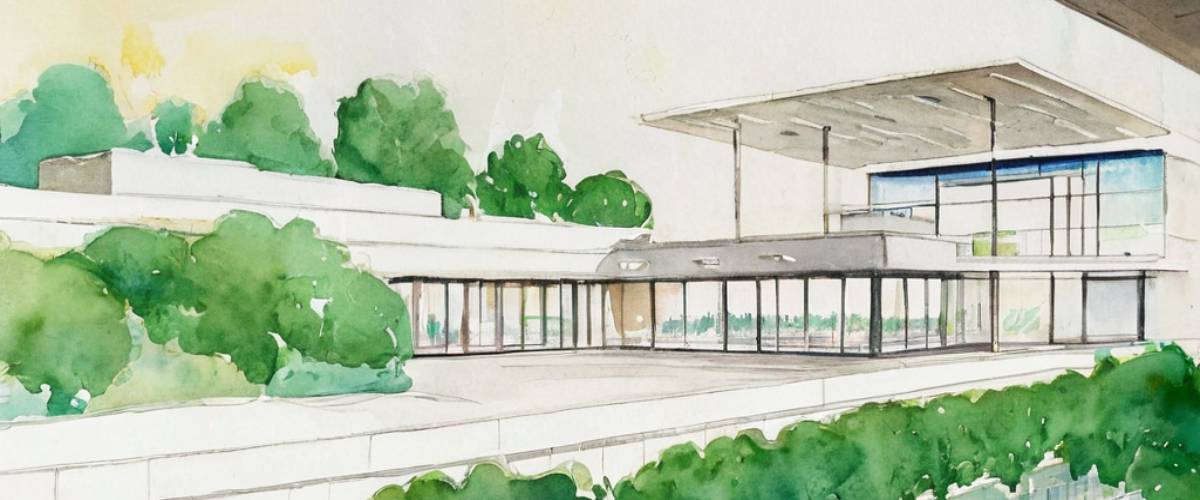
Assessing Site Impact: Soil, Biodiversity, and Ecosystem Disruption
The significance of environmental impact on the built surroundings stems from the reality that every construction activity permanently transforms its territory. Soil sealing constitutes the primary impact: conventional construction impermeabilizes 60-85% of a site (building footprint plus roads plus parking), eliminating infiltration capacity, biological activity, and the natural water cycle. Across the EU, artificially sealed land has increased by 78,000 hectares per year between 2000 and 2018 (EEA, 2020), consuming productive agricultural and ecological land at an alarming rate. Each square meter of sealed soil destroys 2-5 kg of organic matter, 15-30 years of pedogenesis, and the habitat of 1,000-10,000 soil organisms per gram (bacteria, fungi, invertebrates).
Biodiversity impact assessment must precede any construction activity. The EU Habitats Directive (92/43/EEC) and national transpositions require environmental impact assessment for projects affecting Natura 2000 network sites (18% of EU territory). The BREEAM LE 02 (Land Use and Ecology) methodology awards up to 5 points for improving the ecological value of the site relative to baseline conditions: pre-construction ecological survey, protection plan during construction, post-construction habitat restoration, and demonstrable biodiversity net gain (BNG). The UK's Environment Act 2021 established the BNG standard, mandating a minimum 10% increase in biodiversity units following intervention, calculated using the DEFRA 4.0 metric. LEED v4.1 SS (Site Assessment credit) awards 1 point for a comprehensive site evaluation covering topography, hydrology, microclimate, vegetation, soils, and existing habitats.
Stormwater Management and the Water Cycle in Built Environments
Soil impermeabilization fundamentally disrupts the hydrological cycle: undeveloped natural terrain infiltrates 50-70% of precipitation, evaporates 20-30%, and generates only 5-15% surface runoff. Conventionally urbanized impervious terrain inverts these proportions: generating 55-70% runoff, infiltrating only 5-15%, and evaporating 20-30% (EPA, 2003). This amplified runoff causes urban flooding, stream channel erosion, diffuse pollution (hydrocarbons, heavy metals, sediment), and combined sewer overflow events.
Sustainable Drainage Systems (SuDS) replicate the natural hydrological cycle on developed sites: permeable pavements (porous concrete, permeable block paving, stabilized gravel) infiltrate 100-500 l/m2 per hour and reduce runoff by 50-90% compared with conventional asphalt. Infiltration trenches and rain gardens (bioretention cells) retain and filter runoff with pollutant removal rates of 80-90% for total suspended solids and 50-70% for heavy metals. Retention and attenuation tanks store rainwater for reuse in irrigation (garden irrigation demand: 3-6 l/m2 per day during Mediterranean summers). LEED SS (Rainwater Management credit) requires managing the 95th percentile storm event through infiltration, evapotranspiration, or reuse, awarding up to 3 points. National and regional regulations increasingly mandate SuDS: the UK's Schedule 3 of the Flood and Water Management Act, Australia's WSUD frameworks, and several US states' post-construction stormwater standards all require on-site water management.
Urban Heat Island Effect and Site Microclimate
The urban heat island (UHI) effect elevates city air temperatures by 2-8degC above surrounding rural areas (Oke, 1982), with nocturnal peaks reaching up to 12degC in dense cities such as Phoenix, Tokyo, or Athens during heat wave events. The causes are: high solar absorptance materials (asphalt: albedo 0.05-0.10; dark concrete: albedo 0.10-0.20), absence of vegetation (elimination of evapotranspiration), anthropogenic heat (HVAC exhaust, traffic, industry), and urban canyon geometry (building-to-street ratios that trap longwave radiation). The UHI effect increases cooling demand by 15-25% and heat-related mortality by 10-20% during extreme heat episodes (Lancet Countdown, 2023).
Site-scale mitigation strategies include: high-albedo materials (reflective pavements with albedo 0.30-0.50, cool roofs with albedo 0.60-0.80, reducing surface temperature by 10-30degC compared with conventional dark surfaces), vegetated roofs (extensive systems with 8-15cm substrate depth: reducing roof surface temperature by 30-40degC during summer, Sailor, 2008), and urban tree planting (a mature tree transpires 200-400 liters of water per day, providing the equivalent of 5-10 kW of cooling capacity). LEED SS (Heat Island Reduction credit) requires that 50% of parking and roof surfaces use high-SRI materials (Solar Reflectance Index of 29 or above for low-slope roofs, 39 or above for pavements), or vegetated roofs. BREEAM LE 04 awards up to 2 points for reducing UHI effects through site design measures.
Carbon Footprint of the Built Environment and Ecological Compensation
The building sector is responsible for 37% of global CO2 emissions (UNEP Global Status Report, 2022): 27% from building operations (heating, cooling, lighting) and 10% from embodied carbon (material manufacture, transport, construction). The site-level carbon footprint additionally includes emissions from land-use change: converting agricultural land releases 5-15 tCO2eq/ha (loss of soil organic carbon), while deforestation emits 100-500 tCO2eq/ha depending on forest density (IPCC, 2019). Developing on previously urbanized land (brownfield sites) avoids these emissions entirely and receives recognition under LEED SS (Surrounding Density and Diverse Uses credit, 5 points).
Ecological compensation mitigates residual impact through revegetation, habitat creation, and degraded ecosystem restoration. Tree planting on and around building sites sequesters 5-25 kgCO2/tree per year (varying by species and maturity: a mature Aleppo pine sequesters 10-15 kgCO2/year, a mature London plane tree 20-25 kgCO2/year). Extensive green roofs sequester 1-5 kgCO2/m2 per year while intensive green roofs (with shrubs and trees) sequester 5-15 kgCO2/m2 per year. Native species planting is strongly preferred: indigenous plants require 50-70% less irrigation than imported ornamental species and provide habitat for local fauna. International best practice, including the UK's BNG requirement of a minimum 10% biodiversity uplift and Australia's offset policies, is driving the adoption of quantified ecological compensation as a standard development condition.
Impact Monitoring and Environmental Site Certifications
Continuous environmental impact monitoring verifies the effectiveness of mitigation measures over time. Key performance indicators include: soil permeability (percentage of permeable surface relative to total site area: target of 40-50% or above), vegetation coverage (ratio of green surface to total site area), biodiversity (Shannon diversity index: H' of 2.0 or above indicates good species diversity), water management (percentage of runoff infiltrated or reused), and surface temperature (differential with surrounding urban context measured by infrared thermography).
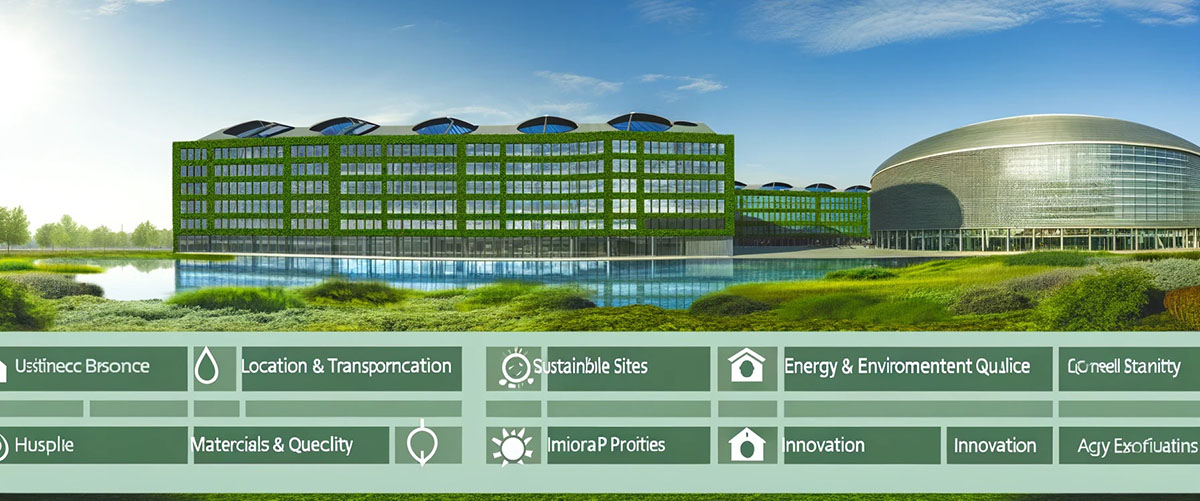
Environmental certification systems evaluate site impact through dedicated categories: LEED v4.1 Sustainable Sites (SS) allocates 10 points across prerequisites and credits (construction pollution prevention, site assessment, surrounding density, transit access, open space, rainwater management, heat island reduction, light pollution reduction). BREEAM Land Use and Ecology (LE) awards up to 10 points across 5 credits covering site selection, ecological value, protection of ecological features, impact mitigation, and long-term ecological management. Green Globes dedicates 11.5% of its total score to site impact. The integration of these strategies enables the built environment to minimize its ecological footprint: the Centro Botin (Santander, Spain, Renzo Piano, 2017) restored 30,000m2 of waterfront gardens with native species and permeable pavements, measurably improving coastal biodiversity compared with the prior condition of surface parking lots.
References
- [1]The energetic basis of the urban heat islandQuarterly Journal of the Royal Meteorological Society, 108(455), 1-24.
- [2]Protecting Water Quality from Urban RunoffEPA 841-F-03-003.
- [3]A green roof model for building energy simulation programsEnergy and Buildings, 40(8), 1466-1478.
- [4]Climate Change and Land: Special Report on Climate Change, Desertification, Land Degradation, Sustainable Land ManagementIntergovernmental Panel on Climate Change. ISBN: 978-92-9169-154-8
- [5]2022 Global Status Report for Buildings and ConstructionUnited Nations Environment Programme. ISBN: 978-92-807-3984-8
Comments 0
No comments yet. Be the first!
Leave a comment