The energy performance gap: the greatest immediate challenge
The challenges of energy efficiency in buildings begin with a fundamental problem: buildings consume between 30% and 100% more energy than their certificates and design simulations predict. This phenomenon, known as the performance gap, has been extensively documented by the Innovate UK (formerly Technology Strategy Board) programme, which between 2010 and 2015 monitored 76 new-build buildings in the United Kingdom and found that actual consumption exceeded predictions by 150-300% in the most extreme cases and by 50-80% on average. The causes are multiple: construction defects that increase air permeability by 2-5 times compared to the design, unmodelled thermal bridges that raise losses by 15-30%, HVAC systems operating outside their optimal point with efficiencies 20-40% lower than rated, and occupant behaviour that includes opening windows while the heating is running or maintaining setpoint temperatures 2-4°C above the design assumption.
Closing the performance gap requires action on three levels: design (simulations calibrated with real local climate data rather than standard files, and detailed thermal bridge modelling using tools such as THERM/WINDOW or AnTherm), construction (quality control protocols that include intermediate Blower Door tests during the build, infrared thermography of the envelope before dry lining is closed, and systems commissioning) and operation (continuous monitoring of actual consumption with a maximum deviation of 10-15% from the calibrated model). The NABERS (Australia) standard certifies the actual measured performance of the building in use rather than the theoretical design performance, and has demonstrated that transparency around actual consumption reduces the gap by 40-60% in buildings that participate in the rating scheme, with over 1,200 buildings certified as of 2023.
Decarbonisation of the existing building stock: scale and speed
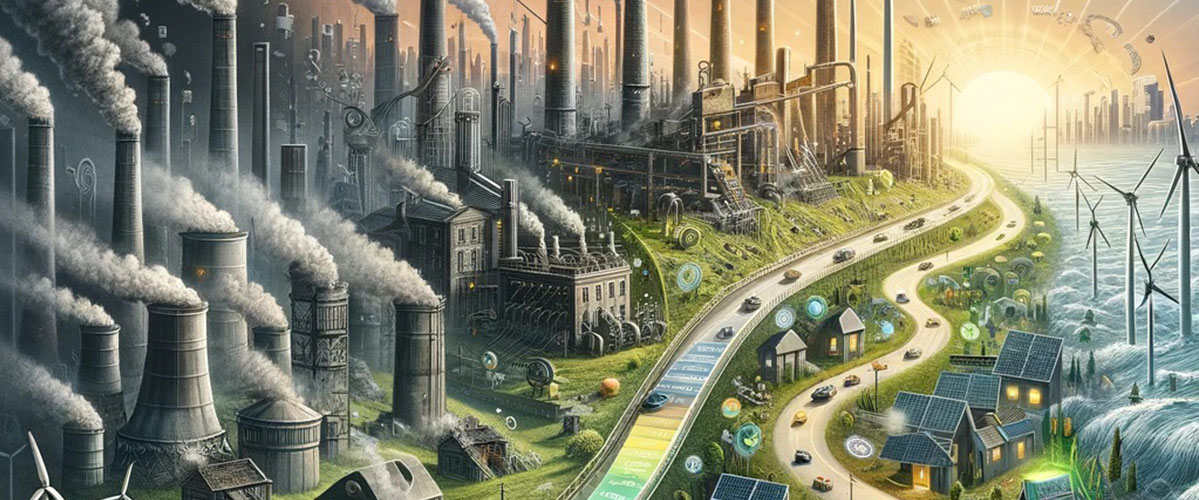
The future of energy efficiency depends on the retrofit of the existing stock: in the European Union, 75% of buildings are energy-inefficient according to the European Commission (Renovation Wave, 2020), and the annual energy retrofit rate stands at 1%, when it should be 3% to achieve climate neutrality by 2050. This means retrofitting 35 million buildings in three decades — 1.2 million/year — compared to the current 250,000/year. The estimated cost is 275 billion euros/year (additional to current investment), and the Next Generation EU funds allocate 72 billion to building renovation for the 2021-2026 period — a significant boost but insufficient to sustain the necessary pace. In Spain, the Long-Term Strategy for Energy Renovation in the Building Sector (ERESEE 2020) identifies 9.7 million dwellings rated E, F or G as priorities for retrofit.
The new Energy Performance of Buildings Directive (EPBD recast, 2024) establishes that all residential buildings must reach at least class E by 2030 and class D by 2033, and non-residential buildings class E by 2027 and class D by 2030. These mandatory thresholds affect the 15-20% most inefficient portion of the stock (classes F and G) and will require average investments of 15,000-40,000 €/dwelling to reach class D through envelope insulation, window replacement and HVAC system renovation. The challenge is not only technical and financial but also social: energy poverty affects 8-15% of European households (Eurostat, 2022), and retrofit obligations may worsen the situation if not accompanied by soft financing mechanisms, direct subsidies for low-income households and pay-as-you-save schemes. The challenges of energy efficiency are inseparable from social equity.
Renewable integration, storage and total electrification
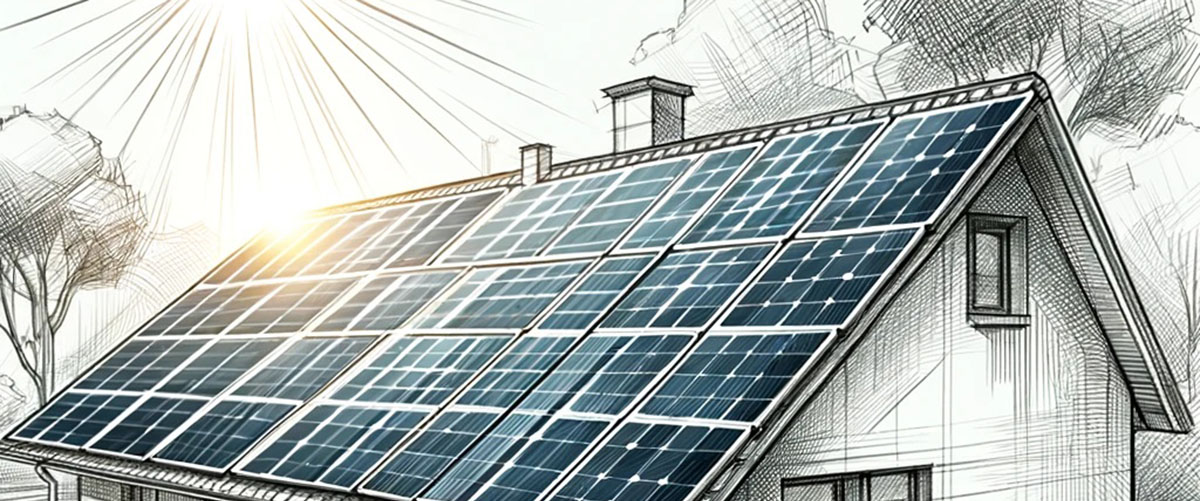
The future of energy efficiency converges with building-integrated renewable generation: rooftop photovoltaic systems (typical capacity 3-10 kWp for single-family homes, 30-100 kWp for multi-family buildings) generate between 30% and 80% of annual electricity demand depending on orientation, tilt and climate zone. However, the simultaneity between solar generation and consumption is only 25-40% (direct self-consumption), making it necessary to incorporate storage to maximise self-consumption to 60-80%. Domestic lithium-ion batteries (5-15 kWh capacity, cost of 400-600 €/kWh in 2024 versus 1,200 €/kWh in 2015) are becoming a standard component of self-consumption installations: in Germany, over 70% of new residential PV installations include a battery (BSW Solar, 2023). The goal is the nZEB (nearly Zero Energy Building) that the EPBD has required for all new construction since 2021.
The total electrification of thermal demand through heat pumps is the other pillar of the energy future of buildings. Current air-source heat pumps achieve COPs of 3-5 (generating 3-5 kWh of thermal energy for every 1 kWh of electricity consumed), making them 3-5 times more efficient than gas boilers (COP ~ 0.90-0.95) and enabling electric heating and DHW to emit less CO2 than gas even with the current electricity mix of most European countries. The European Heat Pump Association (EHPA, 2023) reported sales of 3 million heat pumps in Europe in 2022, with a target of 60 million installed by 2030 under the REPowerEU plan. In Spain, heat pump sales grew by 35% in 2022, reaching 615,000 units. The combination of photovoltaics + battery + heat pump + high-performance envelope defines the paradigm of the energy-efficient building of the future: a building that generates most of its energy, stores it and uses it with maximum efficiency for each end use.
Digitalisation and digital twins: the continuous optimisation of performance
Digital twins of buildings are virtual replicas that integrate real-time data from IoT sensors (temperature, humidity, CO2, occupancy, electricity consumption by circuit, PV production) with the BIM model and energy simulations, enabling continuous performance optimisation that reduces consumption by 15-25% compared to conventional management with static BMS systems. The Willow Twin platform manages over 500 buildings globally with documented savings of 18-22% in energy consumption. Machine learning algorithms predict heating, cooling and lighting demand 2-4 hours in advance and adjust systems in real time: the company BrainBox AI (Canada) reports savings of 20-25% in HVAC through its AI-based predictive control system, installed in over 200 commercial buildings across 20 countries.
Envelope monitoring using heat flux meters and periodic infrared thermography enables the detection of insulation degradation, air infiltration and emerging thermal bridges before they significantly affect consumption. The European project INDICATE (2020) developed continuous monitoring protocols that detect envelope performance losses with a sensitivity of 5-10%, enabling preventive maintenance that avoids cumulative consumption increases of 10-20% over the building's service life. The future of energy efficiency is not a state that is reached but a continuous optimisation process: efficient design, controlled construction, full commissioning, permanent monitoring and predictive adjustment through artificial intelligence form a virtuous cycle that maintains building performance at its optimum throughout its entire service life, progressively narrowing the gap between theoretical and actual performance until it becomes irrelevant.
References
- [1]Building Performance Evaluation Programme: Findings from Domestic Projects — Making Reality Match DesignInnovate UK (formerly Technology Strategy Board).
- [2]A Renovation Wave for Europe — Greening our buildings, creating jobs, improving lives. COM(2020) 662 finalEuropean Commission.
- [3]Estrategia a Largo Plazo para la Rehabilitación Energética en el Sector de la Edificación en España (ERESEE 2020)Ministerio para la Transición Ecológica y el Reto Demográfico.
- [4]European Heat Pump Market and Statistics Report 2023EHPA.
- [5]The gap between predicted and measured energy performance of buildings: A framework for investigationAutomation in Construction, 41, 40-49.
- [6]Autonomous Building Technology: AI-Driven HVAC Optimization — Results from 200+ Commercial BuildingsBrainBox AI Inc..


Comments 0
No comments yet. Be the first!
Leave a comment