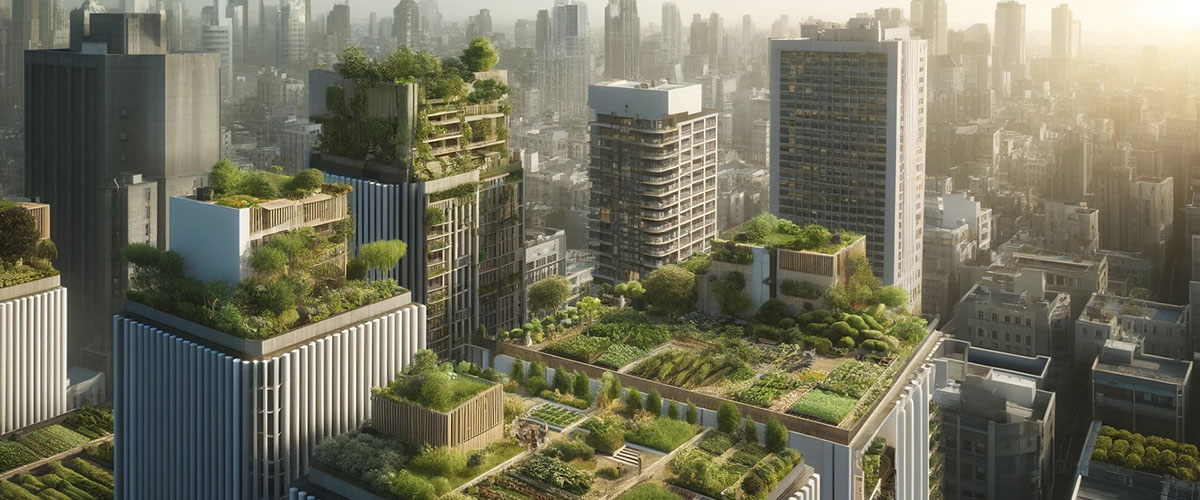
Space assessment and minimum conditions for starting an urban garden
Starting an urban garden in small or unconventional spaces requires a preliminary technical assessment of three fundamental parameters: hours of direct sunlight, load-bearing capacity of the support surface and access to irrigation water. Sunlight is the primary limiting factor: fruiting vegetables (tomato, pepper, eggplant) require a minimum of 6 to 8 hours of direct sun daily, leafy greens (lettuce, spinach, chard) thrive with 4 to 6 hours, and aromatic herbs (parsley, cilantro, mint) tolerate 3 to 4 hours (Duchemin et al., 2008). A south-facing balcony at latitudes of 35° to 45° N receives between 1,200 and 1,800 hours of sunlight annually, sufficient for most crops. The load-bearing capacity of a standard residential balcony ranges from 200 to 350 kg/m² per CTE DB SE-AE, which allows installing containers with saturated substrate weighing up to 200 kg/m² with an adequate safety margin. For unconventional spaces such as windowsills (width of 15 to 30 cm, maximum load of 30 to 50 kg/linear meter), lightweight planters of 3 to 8 liters with low-density substrate based on coconut coir (dry density of 70 to 100 kg/m³ versus 200-300 kg/m³ for peat) are required.
Small spaces available for starting an urban garden include balconies (average area of 3 to 8 m² in Spanish dwellings), terraces (10 to 30 m²), interior courtyards, communal rooftops, windowsills and walls with favorable orientation. A solar inventory of the space, achievable with free applications such as Sun Surveyor or Sun Seeker, allows mapping the zones receiving more than 4 hours of direct summer sun and planning crop distribution. Unconventional spaces present microclimates that can be leveraged: a south-facing brick wall accumulates heat and creates a zone 2 to 4 °C warmer than its surroundings, extending the growing season by 2 to 4 weeks in spring and autumn. Wind-sheltered corners reduce evapotranspiration by 20% to 40%, decreasing irrigation needs. The minimum budget to start a productive garden on a 3 m² balcony ranges from 50 to 150 EUR, including 4-6 containers of 20 to 40 liters (15-40 EUR), substrate (20-40 EUR for 100 liters of organic universal substrate), seeds and seedlings (10-30 EUR), and a watering can or basic drip irrigation system (10-40 EUR).
Containers, substrates and growing systems for small spaces
Container selection for starting an urban garden in small spaces must optimize substrate volume per occupied area. Geotextile fabric pots (200 to 400 g/m²) offer advantages over rigid plastic: they are 60% lighter when empty, enable air pruning of roots that stimulates root branching and vegetative growth, fold flat for off-season storage and are available in volumes from 5 to 200 liters. Minimum volumes per crop are: lettuces and aromatics (3 to 5 liters), carrots and radishes (10 to 15 liters, minimum depth of 25 cm), tomatoes and peppers (20 to 40 liters), zucchini (40 to 60 liters) and eggplants (25 to 35 liters). Raised growing table systems (standard dimensions of 120 x 60 x 80 cm, 150-liter capacity) provide ergonomic access and accommodate 8-12 vegetable plants simultaneously, at a cost of 60 to 200 EUR depending on material (treated wood, galvanized steel, recycled polypropylene).
The substrate for small-container gardening must ensure drainage, water retention and nutrient supply within a limited volume. The optimal mix combines 40% coconut coir (water retention capacity of 800% of its dry weight), 30% mature compost (supply of nitrogen, phosphorus and micronutrients), 20% perlite (2-5 mm particle size, improves aeration and reduces density to 100-120 kg/m³) and 10% worm castings (beneficial microbial load of 10⁸ CFU/g that suppresses root pathogens). This mix has a pH of 6.0 to 6.8, electrical conductivity of 1.5 to 2.5 dS/m and a saturated bulk density of 600 to 800 kg/m³, 50% lower than garden soil. Biweekly fertigation with worm casting extract diluted to 10% (50 ml of extract per liter of water) or with liquid organic fertilizer (NPK 4-3-6, dose of 5 ml/liter) maintains substrate productivity throughout the season without renewal. Container substrates lose 10% to 15% of volume annually through organic matter mineralization, requiring an autumn top-up of compost or castings equivalent to a 3 to 5 cm surface layer.
Crop selection and seasonal planning in unconventional gardens
Crop selection for small or unconventional spaces prioritizes species with high yield per unit area, short cycles and compact growth habit. The highest-yielding container crops are: cherry tomato (4 to 8 kg per plant in a 25-liter pot over a 120-day cycle), padron-type pepper (2 to 4 kg/plant), cut-and-come-again lettuce (5 to 8 consecutive harvests cutting at 3 cm above soil level, total production of 1.5 to 3 kg/m² in 90 days), arugula (cycle of 30 to 40 days, 4-6 cuts per season), strawberries (0.5 to 1 kg/plant in a 5-liter pot, production from March to June), and bush beans (1 to 2 kg/plant in a 15-liter container). Dwarf or determinate varieties developed for container growing include the 'Tiny Tim' tomato (height of 30-40 cm, fruits of 2-3 cm), the 'Patio Snacker' cucumber (suitable for 10-liter pots), and the 'Patio Star' zucchini (compact habit of 60 cm diameter versus 150 cm for standard zucchini).
Seasonal planning maximizes annual production in small spaces through crop succession and exploitation of each season's thermal windows. A Mediterranean balcony allows 3 cycles per year: spring-summer cycle (March to July: tomato, pepper, eggplant, basil), summer-autumn cycle (July to November: beans, zucchini, autumn lettuce), and autumn-winter cycle (October to March: spinach, chard, broad beans, peas, garlic). Companion planting in containers optimizes space: tomato with basil and carrot in a 40-liter container exploits the three substrate levels (deep root of tomato, medium root of carrot, shallow root of basil) and functional complementarity (basil repels aphids from tomato with its essential oils). Vertical growing on recycled pallet structures or stackable pot towers multiplies the productive area by 3 to 5 within the same footprint: a 6-tier tower with a 30 cm diameter occupies 0.07 m² of floor space and offers 0.35 m² of effective growing area, enough for 12-18 strawberry or herb plants.
Irrigation systems and maintenance of small-space gardens
Irrigation is the most critical and frequent task in a small-space urban garden, where small containers dehydrate more quickly than ground-level cultivation due to the higher surface-to-volume ratio. A 10-liter container exposed to direct sun and wind on a balcony loses between 1 and 3 liters daily through evapotranspiration in July under a Mediterranean climate, requiring daily or even twice-daily watering. Low-pressure drip irrigation systems (0.5 to 1 bar) with battery-operated timers (cost of 20 to 50 EUR) automate watering with 2 liter/hour emitters inserted in each container, freeing the gardener from the dependency on manual watering. Balcony drip irrigation kits with capacity for 15 to 30 drippers are installed in 30 minutes connected to a faucet with a timer and cost between 40 and 100 EUR. Self-watering pots with a built-in reservoir (1 to 5 liters bottom tank with cotton or felt capillary wick) maintain substrate moisture for 3 to 7 days without intervention, reducing watering frequency by 50% to 70% and preventing the water stress that reduces tomato yields by 20% to 40%.
Weekly maintenance of a small or unconventional space garden requires between 30 and 90 minutes/week depending on the number of containers. Tasks include: pest inspection (aphids, whitefly and spider mite are the most frequent on urban balconies, controllable with 2% potassium soap or 0.5% neem oil without toxic residues), staking climbing plants, pruning axillary shoots on indeterminate tomatoes (removing suckers when they reach 5 to 8 cm to concentrate production), harvesting at optimal ripeness and substrate top-up. Garden waste management is completed with a domestic vermicomposter of 40 to 60 liters (dimensions of 40 x 40 x 50 cm, suitable for balconies) that processes 2 to 4 kg/week of kitchen scraps and garden trimmings with a population of 500 to 1,000 worms. The most frequent problems in small spaces are iron chlorosis from alkaline irrigation water pH (correctable with EDDHA iron chelate at 6%, dose of 2 g per 10 liters of substrate), substrate compaction (solved by aerating with a fork every 2 months) and heat stress in dark containers exposed to sun (mitigated with reflective covers or painting containers a light color, which reduces substrate temperature by 5 to 10 °C).
References
- [1]Urban Agriculture: Multi-Dimensional Tools for Social Development in Poor NeighbourhoodsField Actions Science Reports, 1(1).
- [2]The Practical Handbook of Compost EngineeringLewis Publishers, Boca Raton. ISBN: 978-0-87371-373-7
- [3]Exploring the Production Capacity of Rooftop Gardens (RTGs) in Urban AgricultureLandscape and Urban Planning, 115, 25-32.
- [4]Urban Agriculture of the Future: An Overview of Sustainability Aspects of Food Production in and on BuildingsAgriculture and Human Values, 31(1), 33-51.
- [5]Farming in and on Urban Buildings: Present Practice and Specific Novelties of Zero-Acreage Farming (ZFarming)Renewable Agriculture and Food Systems, 30(1), 43-54.
Comments 0
No comments yet. Be the first!
Leave a comment