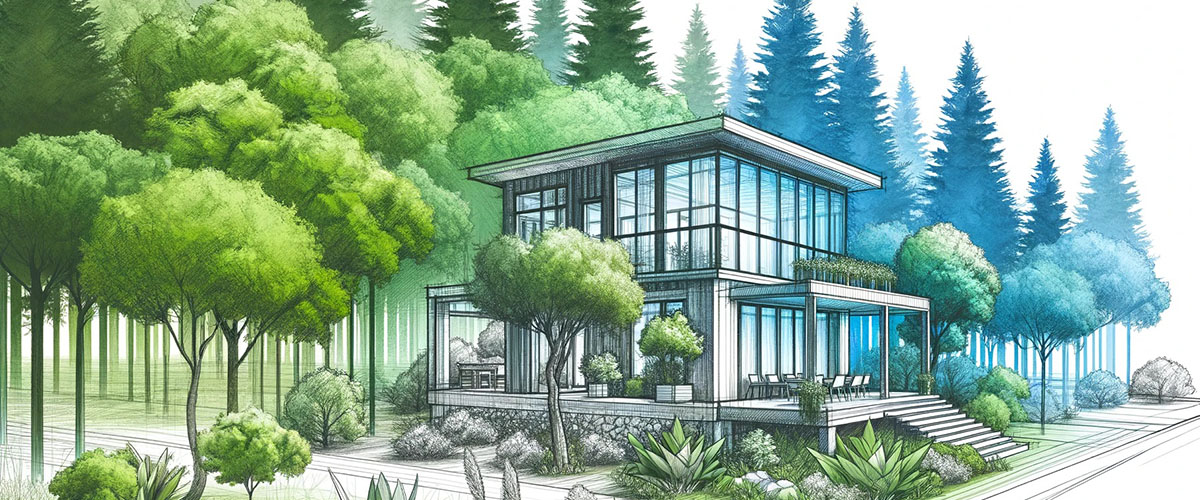
Green home staging: the space as a sustainability demonstration
Home staging applied to sustainable properties goes beyond conventional decoration to transform the space into a tangible performance demonstration. The concept of green staging uses exclusively materials with verifiable environmental certification: furniture made from FSC or PEFC certified wood, textiles with GOTS (Global Organic Textile Standard) certification, paints with the EU Ecolabel and VOC content below 1 g/litre, and LED lighting with a colour temperature of 3,000-4,000 K and luminous efficacy above 100 lm/W. The Spanish firm Moove Home Staging, specialising in certified properties, reported in 2023 that homes with green staging sold 31% faster and at an average premium 4.7% higher than the same homes presented with conventional staging, across a sample of 86 properties in Madrid and Barcelona. The cost of green staging ranges between 3,500 and 8,000 EUR for a dwelling of 80-120 m2, 25-40% above conventional staging, but with a demonstrably positive net return.
The integration of sensory sustainability elements into the display space amplifies the impact. A show flat with green staging should include: a digital information panel displaying real-time indoor temperature (21-22 degrees C), CO2 concentration (below 700 ppm), and noise level (below 30 dB); a natural aroma diffuser based on essential oils (the sense of smell generates memories 100 times more lasting than visual ones, according to the study by Herz & Engen, 1996); and a materials comparison station where visitors can touch and compare conventional insulation (glass wool) with natural insulation (wood fibre, cellulose) and test their tactile and acoustic properties. The International Association of Home Staging Professionals (IAHSP, 2024) documented that show flats stimulating three or more senses generate an average dwell time of 18 minutes versus 8 minutes in exclusively visual spaces, and a return visit rate of 42% versus 19%.
Technical prescriber networks as a sales channel
Technical prescribers — architects, engineers, energy consultants, and specialised financial advisors — constitute a high-conversion sales channel for sustainable properties. 72% of buyers of homes with an A or B energy rating consulted a technical professional before making their purchase decision, compared to 28% of conventional home buyers (Savills, 2023). Establishing prescription agreements with architectural practices specialising in energy retrofit generates a flow of qualified leads with conversion rates of 35-45%, compared to 8-12% for leads sourced from digital advertising. The cost per qualified lead through a technical prescriber ranges between 80 and 200 EUR, while digital advertising on Google Ads for real estate keywords costs between 25 and 60 EUR per lead but with conversions of 2-4%, resulting in a similar final cost per sale (2,000-4,500 EUR) but with higher quality end-buyers.
Building an effective prescription network requires structured relational investment. The best-performing developers organise continuing education programmes for prescribers: quarterly technical sessions (4-6 hours) on construction systems, certifications, and regulatory updates, with CPD (Continuing Professional Development) accreditation recognised by the CSCAE (Consejo Superior de Colegios de Arquitectos de Espana). The prescriber programme run by Knauf Insulation in Spain, with 1,200 registered architects in 2024, generates 340 annual specifications of its insulation systems, with a specification-to-execution conversion ratio of 62%. For property developers, an analogous programme with 50-80 active prescribers (architects, engineers, specialised estate agents) can generate between 30 and 50 sales per year at a programme maintenance cost of 40,000-80,000 EUR/year (events, materials, commissions), equivalent to a CAC of 1,000-2,000 EUR/sale — competitive with any alternative channel.
Experiential events and sustainability open days
Experiential events allow prospective buyers to experience the benefits of sustainability in an immersive format that overcomes the limitations of conventional advertising. The Sustainability Open Day format combines guided building tours with practical workshops of 30-45 minutes: air quality measurement with portable sensors (Aranet4, Airthings), live facade thermography, demonstration of home automation and energy monitoring systems, and a talk with a current resident about their usage experience. The British developer Crest Nicholson organised 24 Sustainability Open Days in 2023, with an average of 85 attendees per event and a reservation conversion rate of 18% among attendees, compared to 6% for conventional open days (Crest Nicholson Annual Report, 2023). The average cost per event ranges between 3,000 and 6,000 EUR (catering, demonstration equipment, technical staff), yielding a cost per sale of 1,900-3,800 EUR.
Seasonal themed events exploit the temporal relevance of sustainable benefits. A Winter Comfort Day in January allows the visitor to feel the temperature difference between the interior of the certified building (21 degrees C without heating activated in a Passivhaus) and the exterior (4-6 degrees C in Madrid), a sensory experience that no brochure can replicate. A Summer Cool Day in July demonstrates that a home with passive solar protection and adequate thermal mass maintains 25-26 degrees C indoors when the exterior reaches 38-40 degrees C, with cooling consumption 70-80% lower than a conventional dwelling. Data from the Passivhaus Trust UK (2023) show that visits during periods of extreme temperature generate conversion rates 67% higher than those during mild weather, because the comfort experience is maximally contrasted. The Spanish developer 100x100 Madera, specialising in CLT Passivhaus homes, combines its open days with timber construction workshops where visitors participate in assembling a 1:5 scale model, creating an emotional bond with the construction system that is reflected in an NPS of 78, among the highest in the Spanish residential sector.
Commercial differentiation and sustainable brand positioning
Commercial differentiation in the sustainable property market requires brand positioning that transcends individual product communication. The developers with the greatest market share in the sustainable segment have built brands associated with verifiable commitments: AEDAS Homes has certified 100% of its output under BREEAM since 2022 (more than 3,500 dwellings per year), Neinor Homes publishes actual energy performance data from its delivered buildings, and Via Celere operates a sustainability laboratory with 14 researchers developing proprietary industrialisation and efficiency solutions. According to the real estate brand barometer by Sigmados (2024, sample of 3,200 prospective buyers), developers perceived as "genuinely sustainable" achieve a purchase consideration index 34% higher than that of developers without a defined sustainability positioning.
A specialised technical content strategy reinforces brand positioning. The periodic publication of white papers with proprietary data (actual consumption of delivered buildings, Blower Door test results, post-occupancy air quality measurements) generates quantifiable sector authority: developers publishing at least 4 technical reports per year receive 280% more mentions in specialist media and 45% more direct information requests than those limiting their communication to conventional press releases (Cision Media Monitoring, 2024). Active participation in trade fairs and technical conferences (Rebuild, Construmat, Greencities, CONAMA) with presentations based on proprietary data generates an average of 40-80 qualified leads per event, at a participation cost of 8,000-25,000 EUR and a visit conversion rate of 25-35%. The coherence between brand positioning, verifiable product quality, and data transparency creates a trust premium: developers with an NPS above 60 in perceived sustainability achieve sale premiums 4.2% higher than developers with an NPS below 40, controlling for equivalent energy rating and location (JLL, 2024).
References
- [1]2024 Home Staging Industry Report: Trends, ROI and Sustainability IntegrationIAHSP.
- [2]Crest Nicholson Annual Report and Accounts 2023: Sustainability and Customer EngagementCrest Nicholson Holdings plc.
- [3]Odor Memory: Review and AnalysisPsychonomic Bulletin & Review.
- [4]European Residential Market: Prescriber Networks and Sustainable Property SalesSavills plc.
- [5]Brand Trust and Green Premium in European Residential MarketsJLL Research.


Comments 0
No comments yet. Be the first!
Leave a comment