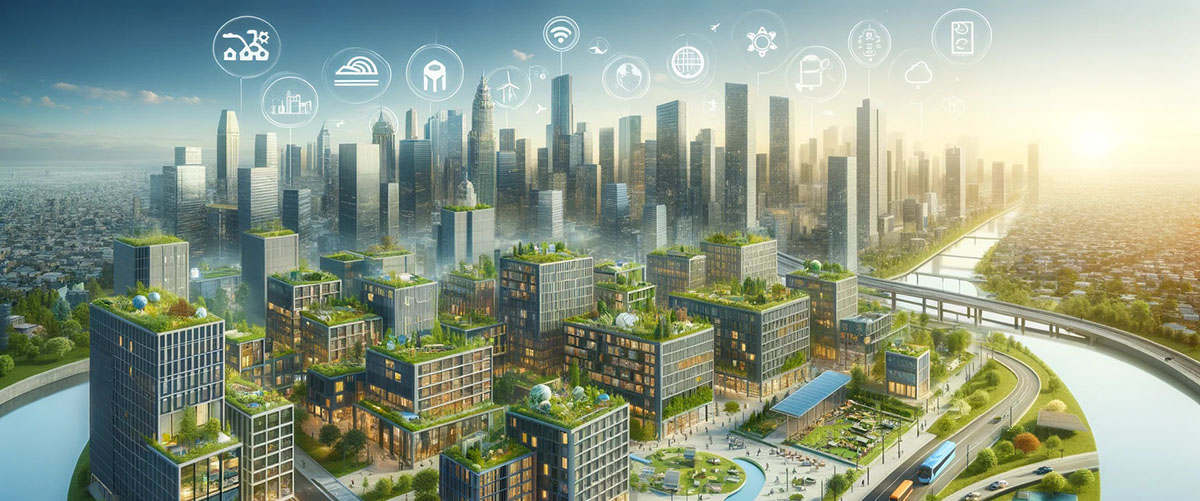
General structure: 8 categories, 12 prerequisites and 110 points
The LEED credit system breakdown begins with the framework of LEED v4.1 BD+C (Building Design and Construction), which organizes building evaluation across 8 categories covering every dimension of sustainability, from site selection to indoor environmental quality. The 12 prerequisites are mandatory (they award no points but non-compliance prevents certification) and credits award points based on the level of performance achieved. The maximum score is 110 points: 100 base points + 6 for innovation + 4 for regional priority. The 4 certification levels are: Certified (40-49), Silver (50-59), Gold (60-79) and Platinum (80+).
The point distribution reflects environmental priorities: Energy and Atmosphere (EA) concentrates 30% of all points (33/110), reflecting that operational energy generates the largest environmental impact over a building's service life. Indoor Environmental Quality (EQ) with 16 points (15%) and Location and Transportation (LT) with 16 points (15%) share second place, emphasizing occupant health and sustainable mobility. Materials and Resources (MR) with 13 points (12%), Water Efficiency (WE) with 11 points (10%) and Sustainable Sites (SS) with 10 points (9%) complete the base score. Innovation (IN) credits allow 6 additional points for pilot strategies or exceptional performance, and Regional Priority (RP) awards 4 bonus points for addressing specific environmental priorities in the project's geographic region.
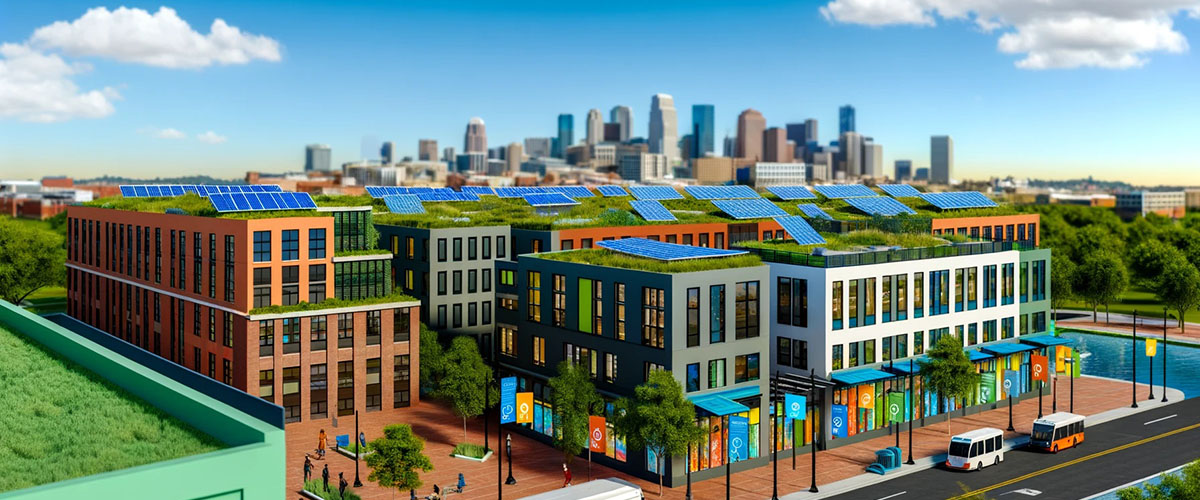
Location and Transportation plus Sustainable Sites: site selection defines 24%
Location and Transportation (LT, 16 points) evaluates project location and connectivity to sustainable transport networks. The primary credits are: LT Surrounding Density and Diverse Uses (5 points) — requires location in a zone with density ≥ 600 m²/hectare of built floor area and ≥ 8 diverse uses (retail, education, healthcare, recreation) within an 800 m radius. LT Access to Quality Transit (5 points) — requires proximity to high-frequency public transport (bus: ≤ 400 m with ≥ 72 trips/day; rail/metro: ≤ 800 m with ≥ 40 trips/day). LT Bicycle Facilities (1 point) — requires bicycle parking for 5% of regular occupants plus showers and changing facilities.
Sustainable Sites (SS, 10 points) includes: prerequisite SS Construction Activity Pollution Prevention (mandatory, 0 points) — an erosion and sedimentation control plan during construction. SS Site Assessment (1 point) — topographic, hydrological, ecological and climatic evaluation of the site. SS Open Space (1 point) — accessible outdoor space ≥ 30% of total site area. SS Rainwater Management (3 points) — manage the 95th percentile storm event through infiltration, evapotranspiration or reuse. SS Heat Island Reduction (2 points) — SRI ≥ 29 for low-slope roofing, SRI ≥ 39 for hardscape, or vegetated roof covering 75% of non-glazed surfaces. SS Light Pollution Reduction (1 point) — exterior luminaires with uplight rating ≤ 5% and light trespass control per IES/IDA BUG classification zones.
Energy and Atmosphere: 33 points that reshape energy design
Energy and Atmosphere (EA, 33 points) is the dominant category in the LEED credit system. The 3 prerequisites are: EA Fundamental Commissioning and Verification (mandatory) — verification of HVAC, lighting and domestic hot water systems by an independent commissioning agent. EA Minimum Energy Performance (mandatory) — demonstrate a minimum 5% improvement (new buildings) over ASHRAE 90.1-2016 via energy simulation per ASHRAE 90.1 Appendix G or prescriptive compliance. EA Fundamental Refrigerant Management (mandatory) — prohibit CFC-based refrigerants in all HVAC systems.
The credits are: EA Optimize Energy Performance (up to 18 points) — 6-50% improvement over ASHRAE 90.1-2016 baseline (6% = 1 point, 50% = 18 points); achieving all 18 points requires Passivhaus-level envelopes, heat pumps with COP ≥ 5, LED lighting with LPD ≤ 5 W/m², and exhaust air heat recovery. EA Renewable Energy (up to 5 points) — 1% renewable energy = 1 point, >10% = 3 points, >25% = 5 points. EA Enhanced Commissioning (up to 6 points) — expanded commissioning including envelope verification, continuous monitoring and corrective action plan. EA Advanced Energy Metering (1 point) — sub-metering by end use (HVAC, lighting, domestic hot water, plug loads) with hourly resolution. EA Grid Harmonization (2 points) — participation in electrical demand response programs.
Water, Materials and Indoor Quality: balancing the remaining credits
Water Efficiency (WE, 11 points) — Prerequisites: WE Outdoor Water Use Reduction (≥ 30% irrigation reduction) and WE Indoor Water Use Reduction (≥ 20% reduction). Credits: WE Outdoor Water Use (2 points, 50-100% reduction), WE Indoor Water Use (6 points, 25-50% reduction), WE Cooling Tower Water Use (2 points, ≥ 5 cycles of concentration) and WE Water Metering (1 point, permanent sub-metering). Materials and Resources (MR, 13 points) — Prerequisites: MR Storage and Collection of Recyclables (dedicated recycling area) and MR Construction and Demolition Waste Management Planning (C&D waste management plan). Credits: MR Building Life-Cycle Impact Reduction (5 points, whole-building LCA per EN 15978 with 5-20% improvement), MR EPD (2 points, ≥ 20 products with verified EPDs), MR Sourcing of Raw Materials (2 points, 20% regional materials or recycled content) and MR Material Ingredients (2 points, chemical transparency for 20+ products).
Indoor Environmental Quality (EQ, 16 points) — Prerequisites: EQ Minimum IAQ Performance (ventilation per ASHRAE 62.1) and EQ Environmental Tobacco Smoke Control (smoking prohibited indoors and within 7.5 m of entries). Credits: EQ Enhanced IAQ Strategies (2 points, MERV 13+ filters, CO₂ monitors), EQ Low-Emitting Materials (3 points, 75-100% low-VOC materials), EQ Construction IAQ Management Plan (1 point, IAQ control during construction and pre-occupancy flush-out with 4,300 m³/m² of outdoor air), EQ Daylight (3 points, sDA ≥ 55-75%), EQ Quality Views (1 point, exterior views for 75% of regularly occupied area), EQ Thermal Comfort (1 point, per ASHRAE 55) and EQ Acoustic Performance (1 point, STC ≥ 50 for partitions, NC 25-40 for occupied spaces).
Credit synergies and scoring maximization strategy
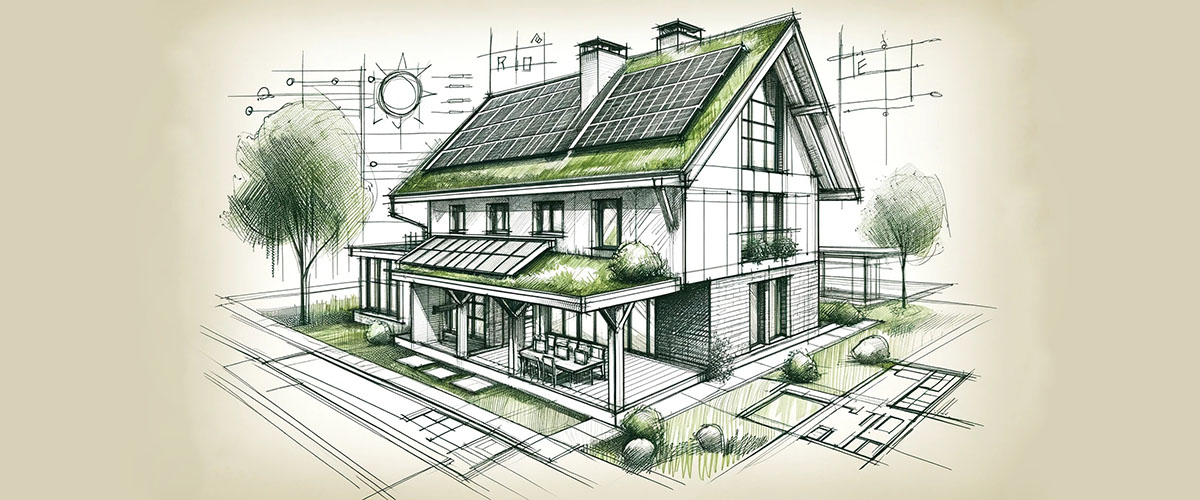
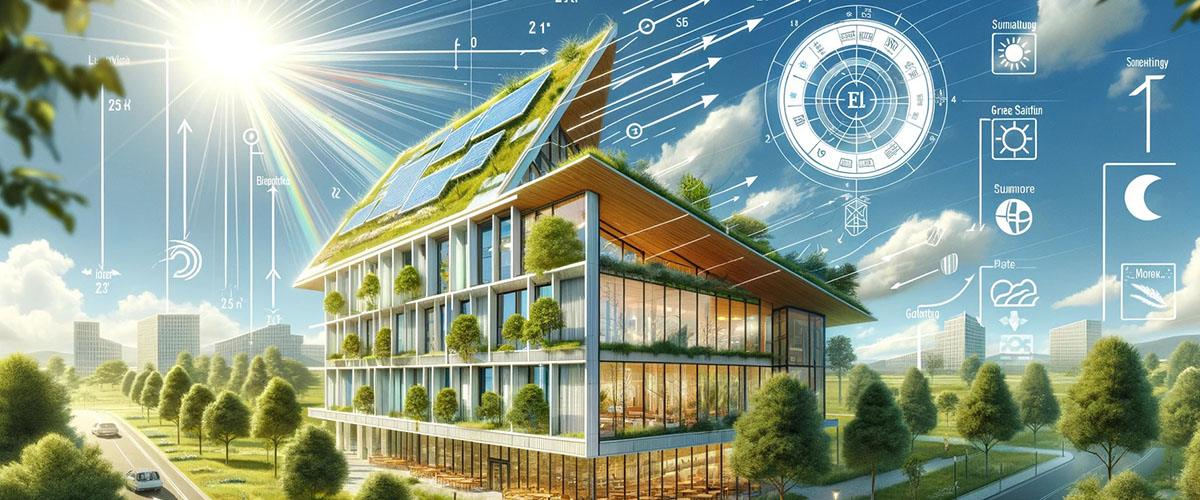
The key to maximizing LEED scores at minimum cost is exploiting synergies between credits: single design decisions that satisfy multiple credits simultaneously. An extensive green roof (investment: 40-80 EUR/m²) simultaneously satisfies: SS Heat Island Reduction (2 points), SS Rainwater Management (up to 3 points) and EA Optimize Energy Performance (contributing to reduced cooling demand via thermal mass and evapotranspiration). Total potential: 5+ points from a single investment. A dense urban location (no additional cost, purely a site selection criterion) satisfies: LT Surrounding Density (5 points), LT Access to Quality Transit (5 points) and LT Reduced Parking (1 point). Total: 11 points at zero cost premium.
A phased certification strategy allows teams to prioritize credits with the best points-to-cost ratio: LT credits (location-based, zero cost) and EQ credits (low implementation cost) deliver the highest return, while EA Renewable Energy (high photovoltaic capital cost) and MR Building Life-Cycle Impact (cost of full LCA consultancy) carry the highest cost per point. An analysis by Newsham et al. (2009) covering 100 LEED-certified buildings demonstrated that LEED buildings consume on average 18-39% less energy than comparable conventional buildings, though 28-35% of the LEED buildings analyzed consumed more energy than their design baseline, highlighting the critical importance of commissioning and post-occupancy monitoring. The LEED credit system, correctly applied through synergy analysis and strategic credit targeting, enables teams to achieve LEED Gold with cost premiums of 2-5% that are recovered within 3-7 years through operational savings alone.
References
- [1]LEED v4.1 Building Design and Construction Rating System — Credit LibraryU.S. Green Building Council.
- [2]ANSI/ASHRAE/IES Standard 90.1-2019: Energy Standard for Buildings Except Low-Rise Residential BuildingsASHRAE. ISBN: 978-1-947192-49-1
- [3]Do LEED-certified buildings save energy? Yes, but...Energy and Buildings, 41(8), 897-905.
- [4]Building Commissioning: A Golden Opportunity for Reducing Energy Costs and Greenhouse Gas EmissionsLBNL-3645E, Lawrence Berkeley National Laboratory.
- [5]ANSI/ASHRAE Standard 62.1-2019: Ventilation for Acceptable Indoor Air QualityASHRAE. ISBN: 978-1-947192-41-5
Comments 0
No comments yet. Be the first!
Leave a comment