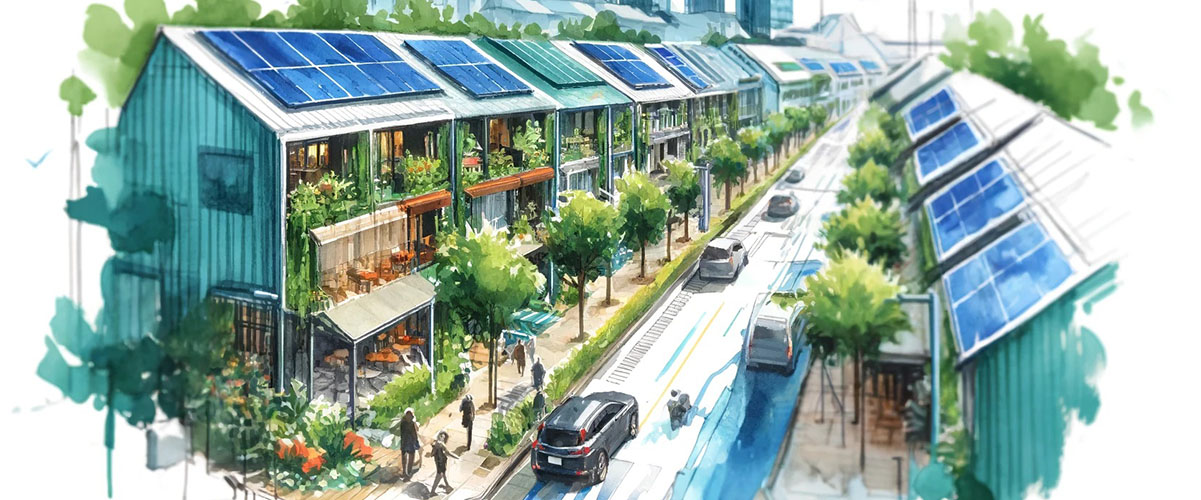
Building Automation Systems (BAS): The Foundation of the Transformation
The green revolution driven by automation is transforming sustainable buildings from their daily operation to their entire life cycle. Building Automation Systems (BAS) — also referred to as BMS or BACS (Building Automation and Control Systems, EN 15232) — form the backbone of this transformation. A BAS integrates the control of HVAC, lighting, solar shading, elevators, fire protection, and access control into a unified platform communicating through protocols such as BACnet (ISO 16484-5), KNX (EN 50090), or Modbus TCP/IP.
The standard EN 15232-1:2017 classifies buildings into 4 automation levels: class D (no automation), class C (standard automation), class B (advanced automation), and class A (automation with integrated energy management). The consumption difference between class D and class A reaches 30-50% in office buildings and 20-35% in residential buildings (CEN, 2017). In Spain, the RITE (IT 1.2.4.6) requires a minimum class C automation for buildings with installed thermal power exceeding 290 kW. The cost of a class A BAS for a 10,000 m² office building ranges from 150,000-300,000 EUR (15-30 EUR/m²), with a payback period of 3-6 years.
Robotics and Automated Manufacturing in Construction
Automation during the construction phase reduces waste, timelines, and occupational hazards. Masonry robots such as the SAM100 (Semi-Automated Mason) by Construction Robotics lay 300-500 bricks/hour (compared to 60-80 by an experienced bricklayer), with a precision of ±1 mm and a 50% reduction in mortar waste. Automated drones perform facade and roof inspections in 1-2 hours (compared to 2-3 days with scaffolding), generating 3D point clouds at 5 mm resolution to detect thermal defects (IR thermography) and structural flaws.
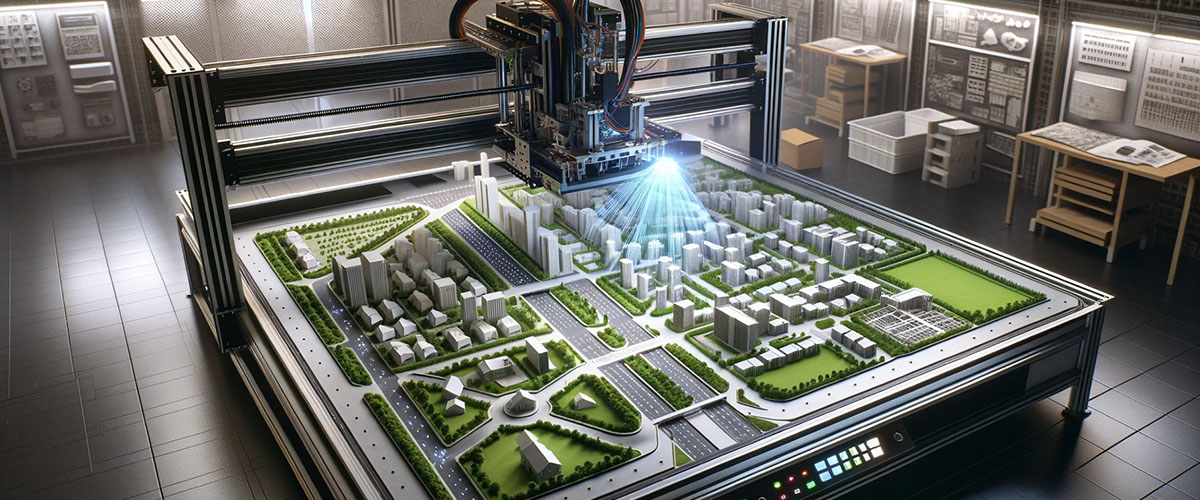
Automated prefabrication in factories (off-site manufacturing) using CNC cutting and assembly robots produces structural modules, facade units, and building services components with tolerances of ±2 mm, reducing waste by 40-60% compared to on-site construction (McKinsey, 2019). Companies such as Katerra (USA, closed in 2021) and Volumetric Building Companies manufacture complete volumetric modules (bathrooms, kitchens, bedrooms) that are transported and assembled on-site within days. In Spain, Modulbau and AEDAS Homes have developed housing projects of 50-100 units using industrialized construction systems that cut timelines by 30-40% and construction waste by 50-70%.
AI Adaptive Control: Continuous Building Learning
AI adaptive control overcomes the limitations of fixed programming in conventional BAS. While a class B BAS operates on predefined schedules and setpoints, a system using reinforcement learning AI continuously adjusts parameters based on occupancy patterns, weather forecasts, electricity tariffs, and sensor feedback. After 3-6 months of learning, these systems achieve additional savings of 15-25% over a properly commissioned conventional BAS (Drgona et al., 2020).
Documented cases include: Google DeepMind reduced cooling energy consumption in its data centers by 40% using AI (2016); BrainBox AI reports savings of 20-25% in North American office buildings with its autonomous AI platform connected to the existing BAS; and Siemens Building X integrates digital twin + MPC + AI to optimize building portfolios with thousands of assets. In Spain, Dexma (now DEXMA Spacewell) provides AI-powered energy analytics for commercial buildings, with documented savings of 10-15% on the energy bill. The AI market for smart buildings will grow from 5.9 billion USD (2023) to 24.7 billion USD (2030), a CAGR of 22.5% (MarketsandMarkets).
Life Cycle Automation: BIM, Commissioning, and Deconstruction
Automation spans the entire building life cycle. During design, BIM (Building Information Modeling) with automated rule-checking (model checking, Solibri) verifies compliance with CTE, RITE, and accessibility regulations automatically, eliminating 60-80% of clashes otherwise detected on-site. Generative design (Autodesk Revit + Project Refinery) produces thousands of layout and envelope alternatives simultaneously optimizing energy, cost, and daylighting.
During operation, automated commissioning (Cx) uses Fault Detection and Diagnostics (FDD) algorithms that analyze BAS data to identify equipment operating outside its design parameters. A study by PNNL (2018) across 1,500 commercial buildings in the U.S. found that automated FDD identifies an additional 20-30% in energy savings by correcting operational faults undetected by the facility manager. At end-of-life, the digital materials passport (Madaster, Platform CB'23) records building materials in the BIM model to facilitate selective deconstruction and recycling of 90-95% of materials.
Landmark Cases and the Autonomous Building of the Future
The Bosco Verticale (Milan, 2014, Stefano Boeri Architects) integrates 20,000 plants, 800 trees, and an automated irrigation system with substrate moisture sensors that optimize water consumption (30% reduction compared to scheduled irrigation). The The Edge building (Amsterdam, 2015) pushes automation to the extreme: 28,000 IoT sensors control lighting, HVAC, and occupancy across 2,500 flexible workstations, with a smartphone app that personalizes temperature and lighting per user. Its consumption of 70 kWh/m² per year and BREEAM Outstanding rating (98.36%) make it a global benchmark.
The future points toward the autonomous building: a structure capable of self-management without routine human intervention, through AI that learns from operational data and self-corrects. Pilot projects from the NEST (Next Evolution in Sustainable Building Technologies) program at Empa (Switzerland) test fully autonomous building modules demonstrating 25% additional savings over conventional BAS. The convergence of BAS + AI + digital twin + maintenance robotics (PV panel cleaning robots, drone facade inspections) will define the next generation of sustainable buildings with near-zero operational consumption and verified embodied carbon footprint via automated BIM + LCA.
References
- [1]EN 15232-1:2017 Energy Performance of Buildings — Impact of Building Automation, Controls and Building ManagementEuropean Committee for Standardization.
- [2]Modular construction: From projects to productsMcKinsey & Company.
- [3]All you need to know about model predictive control for buildingsAnnual Reviews in Control, 50, 190-232.
- [4]The Role of Automated Fault Detection and Diagnostics in Building Energy PerformancePacific Northwest National Laboratory.
- [5]The Edge, Amsterdam: Sustainability Performance DataPLP Architecture / Deloitte.


Comments 0
No comments yet. Be the first!
Leave a comment