
Electric mini-excavators and compact equipment
Electric mobility in construction for sustainability is advancing fastest in the compact-equipment segment, where battery-electric mini-excavators (1-6 tonnes operating weight) have reached commercial maturity. Machines such as the Volvo ECR25 Electric, Caterpillar 301.9, and Wacker Neuson EZ17e carry lithium-ion battery packs of 20-40 kWh, delivering 4-8 hours of typical digging operation on a single charge. The absence of a diesel engine eliminates tailpipe emissions entirely—critical for indoor demolition, basement excavation, and urban sites near sensitive receptors—while reducing noise levels from 85-95 dB(A) for diesel equivalents to 60-75 dB(A), enabling extended working hours in noise-restricted zones.
Operating-cost reductions of 60-80% drive the economic case. Electricity costs 0.03-0.06 EUR per kWh of mechanical work delivered, versus 0.10-0.18 EUR/kWh for diesel (accounting for engine thermal efficiency of 30-40%). Maintenance costs drop 40-50% due to the elimination of oil changes, fuel filters, DPF regeneration, and DEF fluid. Total cost of ownership (TCO) over a 10-year, 10,000-hour lifecycle reaches parity with or undercuts diesel equivalents despite purchase premiums of 30-50%, provided utilisation exceeds 800 hours/year. Rental fleets are accelerating adoption: Boels, Sunbelt, and Finanzauto now offer battery-electric mini-excavators at daily rates only 10-20% above diesel equivalents, absorbing the capital premium and transferring the operating savings to the contractor.
Medium and heavy electric construction machinery
Electrification is scaling to medium excavators in the 20-30 tonne class. The Volvo EC230 Electric, introduced in 2023, carries a 264 kWh battery delivering 6-8 hours of general excavation work and achieving 80-90% CO₂ reduction on a well-to-wheel basis compared with its diesel counterpart (assuming the average European electricity mix at 250 gCO₂/kWh). Cable-connected electric excavators offer unlimited runtime for stationary or semi-stationary applications such as pile driving, material handling, and continuous trenching, though they sacrifice mobility for cable-management constraints.
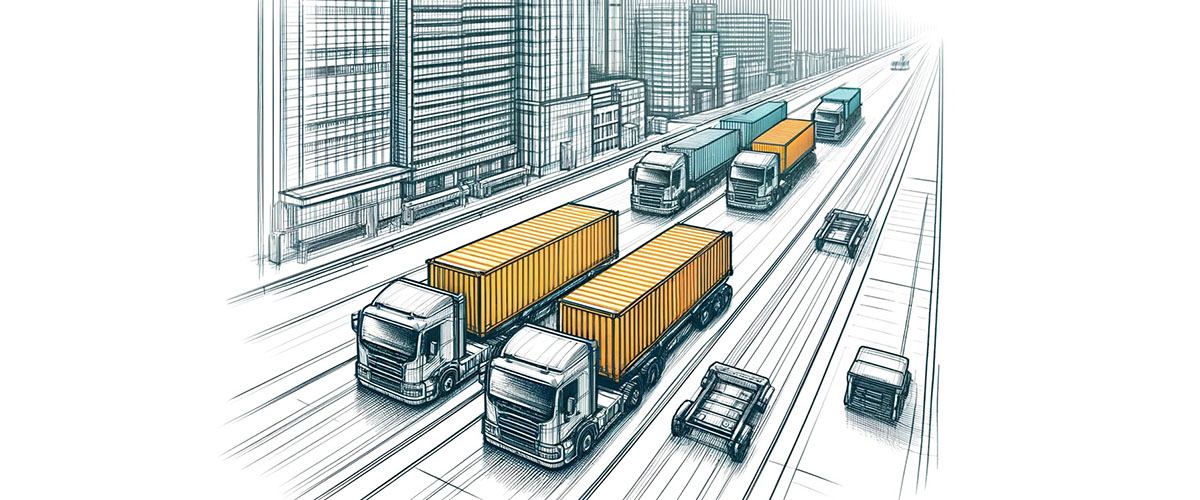
Electric trucks serving construction sites are entering series production. The Volvo FL Electric (16-tonne GVW) carries a 265 kWh battery yielding up to 300 km range—sufficient for most urban material deliveries and waste-removal circuits. The Mercedes-Benz eActros (19-27 tonne GVW) equips three or four battery packs totalling 420 kWh, extending range to 300-400 km under favourable conditions. TCO comparisons by Transport and Environment (2023) indicate that electric trucks become competitive with diesel at annual mileages above 40,000 km when electricity is priced below 0.20 EUR/kWh, a threshold increasingly achievable with on-site photovoltaic charging or off-peak tariff agreements.
Charging infrastructure and energy management
Deploying electric construction equipment requires site-level charging infrastructure matched to fleet size and duty cycles. AC charging at 22-44 kW suits overnight replenishment of mini-excavators and light trucks, requiring a Type 2 or industrial CEE connector and a dedicated circuit from the site’s temporary power supply. DC fast charging at 50-150 kW enables midday top-ups during lunch breaks, restoring 80% state-of-charge in 45-90 minutes for a 40-80 kWh battery pack. For heavy equipment with packs exceeding 200 kWh, MCS (Megawatt Charging System) connectors rated at 750 kW-plus are under standardisation (CharIN), targeting sub-60-minute full charges.
Battery-swap systems offer an alternative for equipment with standardised pack geometries: a discharged pack is mechanically exchanged for a fully charged unit in 5-10 minutes, maximising machine uptime. Stationary battery-energy storage systems (BESS) of 100-500 kWh installed at the site compound can buffer grid demand, charge from overnight off-peak electricity or on-site solar PV, and dispatch power to vehicle chargers during daytime peaks without exceeding the site’s contracted grid capacity. This integrated energy-management approach reduces peak-demand charges by 30-50% and can achieve net-zero-carbon charging when paired with verified renewable-electricity procurement or on-site generation.
Green hydrogen and transitional fuels
Green hydrogen produced via electrolysis powered by renewable electricity offers a decarbonisation pathway for heavy-duty applications where battery weight and recharging time remain limiting factors. JCB has developed a hydrogen internal-combustion engine (H₂ ICE) for backhoe loaders and telehandlers, retaining familiar drivetrain architecture while eliminating CO₂ tailpipe emissions (water vapour and trace NOx only). Current green-hydrogen costs of 4-8 EUR/kg (2024) translate to fuel costs roughly double those of diesel per unit of work, but Spain’s Hydrogen Roadmap (MITECO, 2020) targets production costs of 2-3 EUR/kg by 2030 through 4 GW of electrolyser capacity, which would bring hydrogen TCO within 10-15% of diesel for high-utilisation equipment.
Hydrotreated Vegetable Oil (HVO), conforming to EN 15940, serves as a drop-in replacement for fossil diesel in existing Euro VI engines, reducing well-to-wheel CO₂ emissions by 50-90% depending on feedstock sustainability certification (ISCC or RSB). HVO avoids the capital expenditure and infrastructure requirements of electrification, making it a practical transitional fuel for fleets that cannot yet electrify. However, limited global HVO production capacity (approximately 10 million tonnes/year in 2024) and competition from aviation (sustainable aviation fuel mandates) constrain long-term scalability, positioning HVO as a bridge rather than an endpoint in construction-fleet decarbonisation.
Market barriers, incentives, and trajectory to 2030
The principal barrier to electric construction equipment adoption remains the 30-50% purchase-price premium over diesel equivalents, driven by battery costs of 130-180 EUR/kWh at the pack level (2024). Limited model availability in the 10-50 tonne class further constrains uptake for earthmoving-intensive projects. However, the incentive landscape is evolving rapidly. Spain’s MOVES III programme allocates subsidies covering up to 40% of the incremental cost of electric commercial vehicles and associated charging infrastructure. At the European level, the revised NRMM Regulation (EU) 2016/1628 is expected to introduce CO₂ limits for non-road mobile machinery by 2026-2028, creating a regulatory push analogous to the truck CO₂ standards.
Industry analysts estimate that battery-electric equipment penetration stands at 1-2% of global construction-machinery sales in 2024, concentrated in the compact segment and Northern European markets with high diesel taxes and stringent urban-emission zones. Projections converge on 15-25% penetration by 2030, driven by declining battery costs (projected 80-100 EUR/kWh by 2028), expanding model portfolios from all major OEMs (Volvo CE, Caterpillar, Komatsu, Liebherr, JCB), and tightening regulation. Red Eléctrica de España (REE, 2024) grid-capacity forecasts confirm that the Spanish electricity system can accommodate an additional 2-4 TWh of construction-equipment charging demand by 2030 without compromising supply security, given planned renewable-generation additions of 60 GW under the PNIEC. Early adopters who invest in electric fleets and charging infrastructure now will secure competitive advantage as regulation, client expectations, and carbon pricing converge to penalise fossil-dependent operations.
References
- [1]Electric trucks: the state of play in EuropeTransport & Environment.
- [2]Hoja de Ruta del Hidrógeno: una apuesta por el hidrógeno renovableMinisterio para la Transición Ecológica y el Reto Demográfico.
- [3]Informe del sistema eléctrico español 2023Red Eléctrica de España.
- [4]Regulation (EU) 2016/1628 on requirements relating to gaseous and particulate pollutant emission limits for internal combustion engines for non-road mobile machineryOfficial Journal of the European Union.
- [5]JCB Hydrogen — The future of zero-carbon powerJCB.

Comments 0
No comments yet. Be the first!
Leave a comment