Definition and Classification of Passive Systems
Passive systems are architectural design strategies that exploit the free energy sources available at the building site — solar radiation, wind, ground mass, water — to heat, cool, illuminate and ventilate buildings without mechanical energy consumption. Unlike active systems (boilers, heat pumps, air conditioning units), passive systems have no moving parts, consume no electricity or fuel, and their operational cost is zero. Their effectiveness depends on integrated design: they must be conceived from the concept phase onward, because retrofitting passive systems into an already designed building is costly and inefficient.
The functional classification distinguishes 4 types: (1) passive heating systems (direct solar gain, Trombe walls, attached sunspaces, thermal mass), (2) passive cooling systems (night ventilation, shading, evaporative cooling, earth contact), (3) passive lighting systems (windows, skylights, atria, light shelves, solar tubes) and (4) passive ventilation systems (cross ventilation, stack effect, wind towers). The Passivhaus standard (PHI, 1991) demonstrated that passive systems, combined with a high-performance envelope (U ≤ 0.15 W/m²K, n₅₀ ≤ 0.6 ACH), reduce the heating demand to ≤ 15 kWh/m²·year in any climate, eliminating the need for conventional heating systems.
Passive Heating Systems: Solar Capture and Thermal Storage
Passive heating systems capture solar radiation through glazed surfaces and store it in the interior thermal mass. Direct solar gain is the simplest system: south-facing windows with glass having a solar factor of g = 0.50-0.65 transmit 3-5 kWh/m²·day of solar energy during winter (latitudes 36-43°N). The energy is stored in the concrete floor slab (capacity: 250-300 kJ/m²K for 20 cm thickness) and released during the night, dampening the thermal swing to 2-4°C.
The Trombe wall (Félix Trombe and Jacques Michel, 1967) combines a heavyweight wall painted dark (absorptance α ≥ 0.90), an air gap and an outer glass pane: solar radiation heats the wall, which stores 150-250 kWh/m²·year of useful energy in a Mediterranean climate and transmits it to the interior with a time lag of 6-10 hours (coinciding with nighttime). The attached sunspace on the south facade functions as a buffer zone and solar collector: the temperature inside the sunspace exceeds the outdoor temperature by 5-15°C during winter sunshine hours, preheating the air that ventilates the adjacent rooms. The cost of passive heating systems is 0-5% of the construction cost when integrated from the design phase (orientation + glazing + thermal mass), compared to 3-8% for an active heating system.
Passive Cooling Systems: Shading, Thermal Mass and Night Ventilation
Passive cooling systems eliminate or reduce unwanted solar gain and dissipate accumulated heat. Shading is the first line of defense: a horizontal overhang with depth P = 0.5-0.8 × H (opening height) blocks 85-100% of direct solar radiation in summer (angle > 65° at 40°N) while admitting winter sun. External adjustable louvers with external solar reduction factor g_ext = 0.08-0.15 block 85-92% of the radiation before it reaches the glass.
Night ventilation (night purge ventilation) is the most effective passive cooling system in climates with a diurnal temperature range exceeding 10°C: opening windows during the night cools the interior thermal mass, which absorbs heat during the following day. Artmann et al. (2008) demonstrated that night ventilation reduces the maximum daytime temperature by 3-5°C. Evaporative cooling (fountains, channels, vegetation) absorbs 2,450 kJ per liter of water evaporated, cooling the air by 5-10°C in dry climates (RH < 40%). Earth contact (semi-buried buildings, earth tubes) exploits the stable ground temperature at 2-3 m depth (14-18°C in Spain) to precool ventilation air. These combined strategies eliminate the need for air conditioning during 60-90% of summer hours in Mediterranean climates.
Passive Lighting and Natural Ventilation Systems
Passive lighting systems distribute natural light within the building interior without electrical consumption. Windows are the basic system: the rule of thumb establishes that the illuminated depth (DF ≥ 2%) is 2.0-2.5 × Hwindow. Light shelves extend the illuminated zone to 6-10 m depth by reflecting direct light toward the ceiling. Atria illuminate the 4 interior facades of deep buildings with DF ≥ 2% to a depth of 6-8 m per floor. Solar tubes (Solatube) transport natural light up to 6-10 m from the roof, illuminating windowless spaces with 200-500 lux.
Passive ventilation systems renew the indoor air without mechanical fans. Cross ventilation generates 10-20 air changes per hour with winds of 2-4 m/s. Stack-effect ventilation uses the density difference between warm air (less dense) and cool air (more dense): a chimney 6 m tall generates 3-5 Pa of negative pressure, sufficient for 4-8 air changes per hour without wind. Wind towers (badgir) capture wind at 10-15 m height and channel it into the interior, cooling it by evaporation as it passes over water: temperature reduction of 8-15°C in arid climates. The combination of all these passive systems enables buildings with a total energy demand of 15-40 kWh/m²·year, meeting the requirements of the Passivhaus standard and the European NZEB framework (Directive 2010/31/EU).
Built Cases: From Machu Picchu to the Contemporary Passivhaus
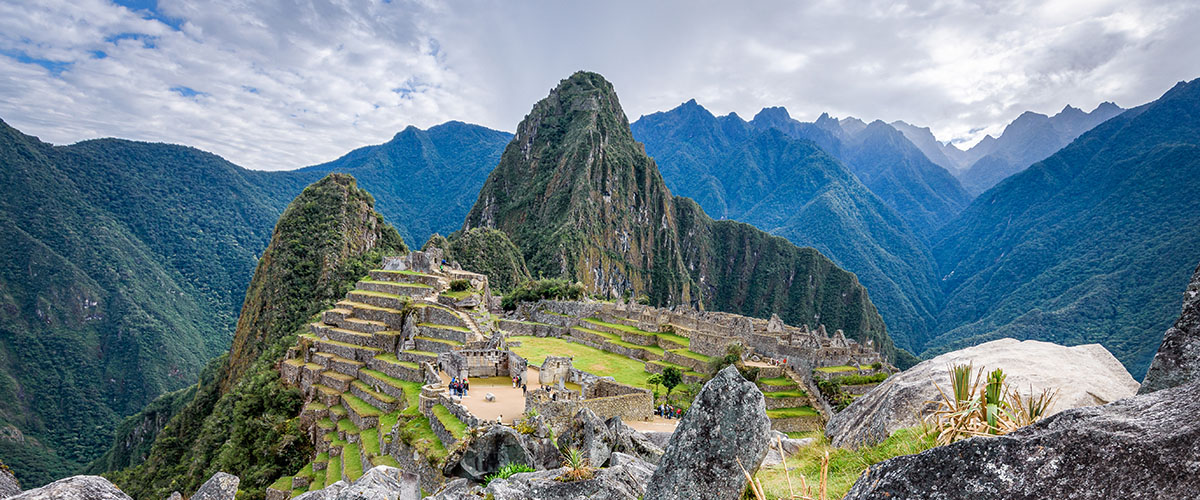
Passive systems have a history spanning 5,000+ years: the dwellings of Machu Picchu (Peru, 15th century) combine stone thermal mass, solar orientation facing north (southern hemisphere) and wind protection from the mountainous topography. The courtyard houses of the Alhambra (Granada, 14th century) use courtyards with fountains (evaporative cooling), 60 cm thick walls (thermal mass), cross ventilation between courtyards and rooms, and lattice screens (solar filters) — maintaining 24-27°C indoors with 40°C outdoors.
In the contemporary era, the Kranichstein Passivhaus (Darmstadt, 1991, Wolfgang Feist) was the first Passivhaus building: 4 dwellings with a measured heating demand of 10 kWh/m²·year over 25+ years of continuous monitoring, demonstrating that passive systems (envelope U = 0.14 W/m²K, triple glazing, MVHR) are durable and reliable. As of 2024, more than 60,000 Passivhaus buildings constructed globally confirm that passive systems work in all climates (from Yakutsk at -50°C to Dubai at +50°C). The Passivhaus cost premium relative to conventional CTE construction in Spain is 5-15%, with a payback period of 8-15 years through energy savings of 75-90%.
References
- [1]Passivhäuser in Mitteleuropa (Passive Houses in Central Europe)Verlag das Beispiel / Passive House Institute.
- [2]Parameter study on performance of building cooling by night-time ventilationRenewable Energy, 33(12), 2589-2598.
- [3]Passive and Low Energy Cooling of BuildingsJohn Wiley & Sons. ISBN: 978-0-471-28473-4
- [4]The Passive Solar Energy BookRodale Press. ISBN: 978-0-87857-237-8
- [5]Criteria for the Passive House, EnerPHit and PHI Low Energy Building StandardPassive House Institute.

Comments 0
No comments yet. Be the first!
Leave a comment