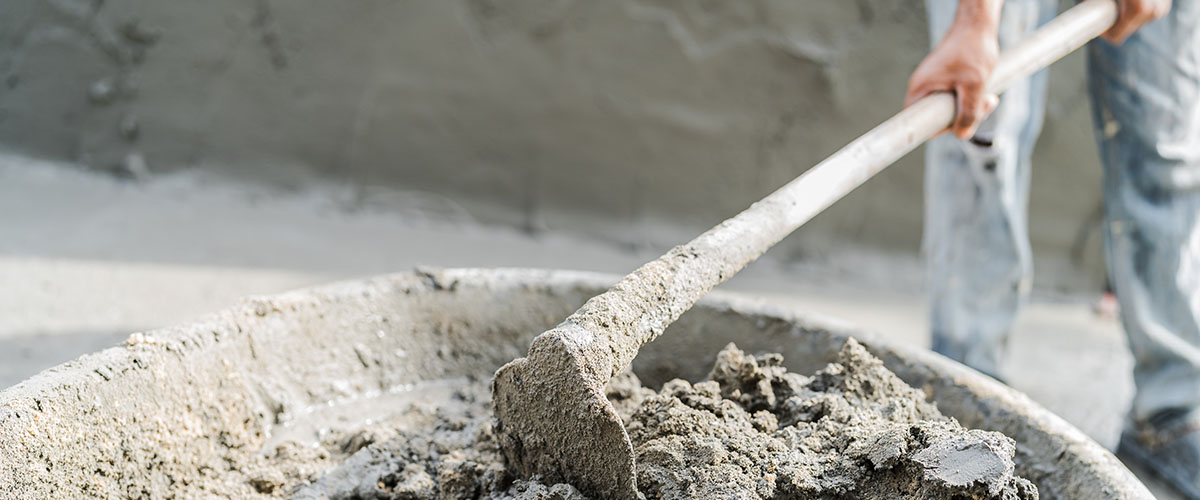
Supply chain resilience: lessons from COVID-19 and beyond
Why you should consider using local materials starts with a pragmatic lesson that the global construction industry learned at significant cost between 2020 and 2023. The COVID-19 pandemic exposed the fragility of long-distance construction supply chains with unprecedented clarity. Global shipping disruptions caused delivery delays of 3-6 months for imported construction products — structural steel from Asia, insulation materials from Eastern Europe, timber from Scandinavia and North America, ceramic products from the Mediterranean. Container freight rates from Shanghai to Rotterdam surged from approximately 1,500 EUR per 40-foot container in January 2020 to 8,000-15,000 EUR by late 2021 — an increase of 5-10 times that cascaded directly into material procurement budgets (McKinsey 2022).
The consequences for construction projects were severe. A survey by the European Construction Industry Federation (FIEC) in 2021 reported average project cost overruns of 12-25% attributable to material price inflation and logistics disruptions, with project delays averaging 4-8 months. Individual materials experienced extreme volatility: European structural timber prices doubled between January and September 2021 (from 250 to 500 EUR/m3), reinforcing steel bar prices increased by 60-80%, and certain insulation products became entirely unavailable for 2-3 month periods. The Suez Canal obstruction (March 2021) compounded maritime disruptions, blocking an estimated 9.6 billion USD of daily trade for six days.
Projects relying primarily on local and regional supply chains — materials sourced within 100-300 km — experienced markedly fewer disruptions. Morel et al. (2001) had already demonstrated the principle in their study of earth construction in France: projects using 90-95% local materials were virtually immune to supply chain volatility because the entire production chain — extraction, processing, transport and installation — occurred within a 50 km radius under the direct oversight of the project team. During the pandemic, this advantage translated into delays of 1-3 months (primarily attributable to labour shortages and site closures, not material availability) compared to 4-8 months for conventionally sourced projects.
Cultural identity and the value of vernacular architecture
The argument for local materials extends beyond logistics to encompass cultural identity and architectural heritage. Every region of the world has developed distinctive building traditions shaped by locally available materials: Cotswold limestone in central England, granite in Galicia and Brittany, volcanic basalt in the Auvergne, rammed earth (tapia) in Castilla-La Mancha and the Maghreb, adobe in the American Southwest and the Andean altiplano, timber frame (colombage) in Normandy and Alsace, and coral stone in East African coastal cities. These vernacular traditions constitute a cultural patrimony that connects communities to their geological and climatic context.
The European Landscape Convention (Council of Europe, Florence 2000) recognises the built environment as an integral component of landscape character and encourages the use of local materials in new construction to maintain regional visual coherence. UNESCO's Historic Urban Landscape approach (2011) similarly advocates for construction practices that respect the material palette of the surrounding context. In practical terms, local stone walls, earth renders and regional timber structures create visual continuity between new and existing buildings that reinforces place identity — an intangible but economically significant value reflected in property prices: studies in the UK (English Heritage, 2019) found that properties in areas with coherent local material use commanded premiums of 5-15% over comparable properties in areas with generic material palettes.
The revival of vernacular architecture within contemporary practice is documented across Europe. In Vorarlberg (Austria), a 50-year tradition of modern timber architecture using regional spruce and fir has created a distinctive architectural identity that attracts cultural tourism worth an estimated 30-50 million EUR/year to the region (Venkatarama Reddy and Jagadish 2003 provide the broader context for material-culture connections). In the Alentejo region of Portugal, contemporary interpretations of traditional rammed earth (taipa) construction have produced award-winning buildings — such as the Casa em Grandola (Aires Mateus, 2019) — that demonstrate how local materials can achieve architectural distinction without nostalgic pastiche. These projects confirm that the use of local materials is not a constraint on design ambition but rather a source of authentic architectural expression grounded in place.
Certification benefits: LEED, BREEAM and VERDE credits for regional sourcing
Green building certification systems provide measurable economic incentives for using local materials by awarding credits that contribute to certification levels — which in turn command rental premiums, lower vacancy rates and favourable financing terms. The certification benefits are structured as follows.
LEED v4.1 (U.S. Green Building Council) awards credits under MR (Materials and Resources): Sourcing of Raw Materials. Option 2 specifically addresses regional materials: products extracted, harvested, recovered and manufactured within 160 km (100 miles) of the project site earn credit when they constitute at least 20% of total material cost, contributing up to 2 points toward the 110-point total. For projects targeting LEED Gold (60-79 points) or Platinum (80+ points), these 2 points can determine the certification level achieved (USGBC 2021).
BREEAM (Building Research Establishment) evaluates material sourcing under Mat 03: Responsible Sourcing of Construction Products, which assesses the environmental management practices throughout the supply chain. While BREEAM does not impose a strict distance threshold, shorter supply chains receive higher scores because they facilitate supply chain verification and traceability — both of which are central to the Mat 03 assessment. Up to 6 credits are available, and the scoring framework rewards materials with documented chain of custody, environmental management systems at extraction sites (ISO 14001 or equivalent) and transparent lifecycle data (EPDs).
VERDE (Green Building Council Spain, GBCe) includes a specific indicator for regional procurement: at least 30% of total material cost must be sourced within 300 km of the project site. The VERDE system also assesses the social dimension of material sourcing, including labour conditions and community impact — dimensions where local procurement inherently offers greater transparency and accountability than distant supply chains. A VERDE-certified office building in Madrid (2022) achieved 42% local material content by specifying Colmenar limestone from quarries 45 km from the site, regional concrete with aggregate from 30 km, and Castilian timber from 120 km, earning full credit for regional sourcing.
Transport emissions and lifecycle carbon: the quantitative case
The environmental argument for local materials is grounded in the module A4 (transport to site) component of the EN 15978 lifecycle framework. Transport emissions depend on three variables: material mass, distance and transport mode. Road freight by articulated HGV (the dominant mode for construction material delivery) emits 0.06-0.10 kgCO2/t per km at full load; rigid trucks (smaller deliveries) emit 0.10-0.15 kgCO2/t per km (Berge 2009). Maritime freight is more efficient per tonne-kilometre (0.008-0.015 kgCO2/t per km) but involves much longer distances and additional road transport at both ends.
For a representative residential building of 150 m2 gross floor area requiring approximately 200 tonnes of construction materials (concrete, masonry, steel, timber, insulation, finishes), the A4 transport emissions range from 3-5 tonnes CO2eq when all materials are sourced within 100 km to 12-25 tonnes CO2eq when materials are sourced at a national average distance of 300-500 km (UNEP 2022). The difference — 7-20 tonnes CO2eq — is equivalent to the annual carbon footprint of 1-3 European citizens. Scaled to the 2.5 million new dwellings constructed annually in the EU, systematic local sourcing would save 17-50 million tonnes CO2eq/year in transport emissions alone — a contribution comparable to the annual emissions of a mid-sized European country.
Huberman and Pearlmutter (2008) demonstrated that in arid climates, where the use of local stone, earth and regionally adapted materials is combined with climate-responsive design, the total lifecycle carbon reduction from local sourcing reaches 20-35% when both A4 transport savings and B6 operational energy reductions (from superior climate adaptation of local materials) are considered together. This finding underscores that transport emissions are not the only benefit: locally adapted materials often provide superior passive thermal performance, reducing operational energy demand over the 50-60 year building lifecycle.
Practical sourcing guide: from geological inventory to advance procurement
Translating the case for local materials into project practice requires a structured procurement approach. The process begins with a geological and resource inventory of the project region, typically covering a radius of 50-200 km from the site. National geological surveys provide base data: the British Geological Survey (BGS), Bureau de Recherches Geologiques et Minieres (BRGM, France), Instituto Geologico y Minero de Espana (IGME) and their counterparts publish maps and databases identifying quarries, clay deposits, sand and gravel reserves, and mineral resources. Supplementary sources include regional chambers of commerce (listing construction material producers), forestry management plans (documenting timber species, volumes and harvesting schedules) and recycled aggregate facility registers.
The second step is performance verification. Local materials must satisfy the same structural, thermal, fire and durability standards as any specification. Testing protocols include: compressive strength (EN 772 for masonry units, EN 12390 for concrete), thermal conductivity (EN 12667), fire classification (EN 13501-1), freeze-thaw resistance (EN 12371 for natural stone) and moisture absorption (EN 772-11). For earth-based materials, applicable standards include DIN 18945-18948 (Germany), NZS 4298:1998 (New Zealand) and the French professional guidelines (Regles professionnelles de construction en terre crue, 2018). Laboratory testing costs of 2,000-8,000 EUR per material type are a minor investment relative to total project material budgets of 100,000-500,000+ EUR.
The third and often most critical step is advance procurement planning. Local quarries, small sawmills and artisanal producers operate at production scales fundamentally different from industrial supply networks. A regional stone quarry may produce 5,000-20,000 tonnes/year versus 500,000+ tonnes/year for a large aggregate supplier. A local sawmill may process 2,000-10,000 m3/year versus 100,000+ m3/year for an industrial operation. These smaller producers require 6-12 months of advance notice to adjust production schedules, stockpile appropriate volumes and, where necessary, open new quarry faces or negotiate additional harvesting permits. Early engagement — ideally during the design development phase, before specifications are fixed — enables mutual optimization: the architect adapts modular dimensions to quarry block sizes and sawmill standard sections, while the producer adjusts extraction plans to project timelines and quality requirements. This collaborative approach, documented by Berge (2009) and Morel et al. (2001), reduces material waste by 10-20%, improves dimensional accuracy, and builds long-term supplier relationships that benefit subsequent projects in the region.
Governments at national and regional levels are increasingly incorporating local material preferences into public procurement frameworks. The EU Public Procurement Directives (2014/24/EU) permit the inclusion of environmental criteria — including transport emissions and lifecycle carbon — as award criteria in construction tenders, provided they are linked to the subject matter of the contract. Several EU member states have translated this into practice: France's Plan National d'Adaptation au Changement Climatique (PNACC) encourages the use of local bio-sourced and geo-sourced materials in public buildings; the Dutch government's Milieuprestatie Gebouwen (MPG) regulation incorporates transport impacts into mandatory environmental performance calculations; and Spain's Ley de Contratos del Sector Publico (9/2017) permits social and environmental award criteria including local economic impact and carbon footprint. These policy instruments, combined with the certification incentives, transport cost savings and cultural values documented above, create a compelling and multi-dimensional case for considering local materials as a default rather than an exception in responsible construction practice.
References
- [1]Embodied energy of common and alternative building materials and technologiesEnergy and Buildings, 35(2), 129-137.
- [2]Building houses with local materials: means to drastically reduce the environmental impact of constructionBuilding and Environment, 36(10), 1119-1126.
- [3]LEED v4.1 Building Design and Construction Rating SystemU.S. Green Building Council.
- [4]The Ecology of Building Materials (2nd ed.)Architectural Press / Elsevier. ISBN: 978-1-85617-537-1
- [5]2022 Global Status Report for Buildings and ConstructionUnited Nations Environment Programme.
- [6]Rise of the Resilient Enterprise: How Construction Companies Are Navigating Supply Chain DisruptionsMcKinsey & Company.

Comments 0
No comments yet. Be the first!
Leave a comment