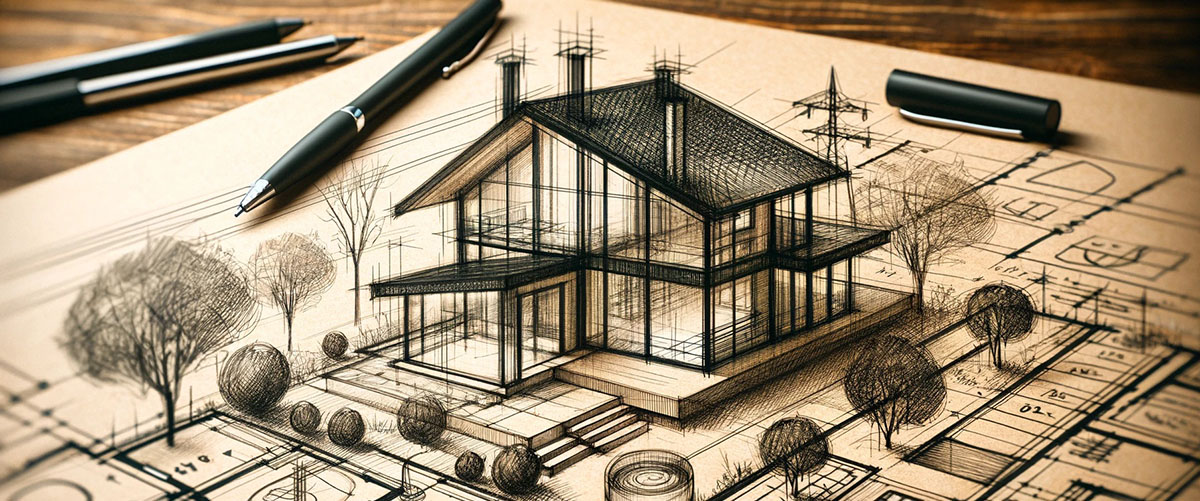
SDGs and the built environment: 6 objectives directly linked to design
The objectives of sustainable design are articulated through global frameworks that quantify measurable targets for the built environment. Of the 17 Sustainable Development Goals (SDGs) adopted under the 2030 Agenda, 6 bear direct relevance to building design: SDG 6 (Clean water and sanitation: reduce water consumption by 50% against baseline), SDG 7 (Affordable and clean energy: 100% renewables in operation), SDG 11 (Sustainable cities and communities: resilient and accessible buildings), SDG 12 (Responsible consumption and production: circular economy in materials), SDG 13 (Climate action: net zero in operational and embodied carbon) and SDG 15 (Life on land: net positive biodiversity at the site level).
Quantifying these objectives demands specific indicators: kgCO₂eq/m² per year for emissions (target: < 5 kgCO₂eq/m² per year in operation for new buildings by 2030, per WGBC), litres/person per day for water consumption (target: < 80 l/person per day versus the 130-150 l/person per day baseline in southern Europe), kg waste/m² built (target: < 15 kg/m² versus the typical 40-60 kg/m²) and biodiversity units (target: +10% net gain versus pre-development condition, BNG). The World Green Building Council has established the sectoral roadmap: all new buildings must achieve net zero operational carbon by 2030 and all buildings (new and existing) by 2050, with a 40% reduction in embodied carbon by 2030.
Planetary boundaries and the environmental footprint of construction
The 9 planetary boundaries (Rockstrom et al., 2009, Stockholm Resilience Centre) define the safe operating space for humanity. Construction directly transgresses 4 of them: climate change (the sector emits 37% of global CO₂, UNEP 2022), land-system change (urbanization of 1.2 million hectares/year globally), biogeochemical cycles (cement manufacturing alone alters the carbon cycle: 4.4 Gt CO₂/year) and freshwater use (building construction and operation consume 12% of global freshwater). Construction also contributes indirectly to biodiversity loss (habitat urbanization) and chemical pollution (VOCs, formaldehyde, microplastics from synthetic building materials).
The environmental footprint of the sector within the EU, quantified by the JRC (Joint Research Centre), reveals that buildings account for 50% of all extracted materials (sand, gravel, stone, timber, metals), 40% of final energy consumption and 36% of generated waste. These figures underpin the objectives of sustainable design: every design decision must be evaluated against planetary boundaries. The tool One Click LCA calculates the environmental footprint of a building across all 16 impact categories of EN 15804, linking each indicator to its corresponding planetary boundary. The Level(s) framework from the European Commission translates these boundaries into 6 macro-objectives for buildings: GHG emissions, resource efficiency, efficient water use, healthy spaces, climate change adaptation, and life cycle cost.
The net zero objective: operational and embodied carbon
The net zero carbon objective represents the most demanding target within sustainable design. According to the WGBC (2019) definition, a net zero building must: (1) minimize energy demand through passive design strategies, (2) meet residual demand with 100% renewable energy (on-site or documented off-site procurement), and (3) offset remaining emissions with verified carbon credits. The energy demand target for net zero buildings is 15-25 kWh/m² per year for heating and cooling (Passivhaus standard) and 50-80 kWh/m² per year of total primary energy (including domestic hot water, lighting, and plug loads).
Embodied carbon (modules A1-A5 + B + C per EN 15978) accounts for 50-70% of total lifecycle emissions in a net zero building over a 60-year service life (because operational carbon is reduced to near zero). Reduction targets are: -40% by 2030 and net zero embodied carbon by 2050 (WGBC, RIBA 2030 Climate Challenge). The benchmark values from the RIBA 2030 Climate Challenge set offices at < 600 kgCO₂eq/m² in embodied carbon (A1-A5) and residential at < 500 kgCO₂eq/m². Key strategies include: mass timber structure (CLT: -500 to -700 kgCO₂eq/m³ of biogenic carbon sequestration), low-carbon cement (CEM III: -40% GWP), recycled steel (EAF: -70% GWP) and adaptive reuse of existing structures (saving 50-75% of embodied carbon compared to new build).
Water efficiency, circularity and social equity
The water efficiency objective targets a 50% reduction in potable water consumption against baseline (LEED WE credit, ASHRAE 90.1 baseline). Strategies include: low-flow fixtures (4-6 l/min versus 12-15 l/min conventional, saving 50-60%), dual-flush toilets (3/6 litres versus 9-12 litres, saving 40-50%), greywater reuse for toilet flushing (saving 30-50 l/person per day) and rainwater harvesting (200-600 l/m² per year in Mediterranean climates). The LEED v4.1 WE credit (Indoor Water Use Reduction) awards up to 6 points for reductions of 25-50% against baseline.
Circularity as a sustainable design objective requires: minimum 20-30% recycled content in materials (by cost), Design for Disassembly (DfD) with 80% of elements recoverable, digital material passports (Madaster), and construction waste below 15 kg/m². Social equity — a dimension frequently overlooked — demands: supply chain traceability for labor rights, universal accessibility compliance, verified indoor environmental quality (WELL v2), and community participation in the design process. LEED v4.1 includes the Social Equity within the Community pilot credit, and the Living Building Challenge mandates 7 petals including Equity as a compulsory requirement, embedding social justice alongside environmental performance across its 20 imperatives.
Measurement and verification tools for design objectives
Verifying the objectives of sustainable design requires quantitative tools at every stage. For carbon assessment: One Click LCA, Tally (Revit plugin), eTool and OpenLCA calculate a building's carbon footprint per EN 15978, benchmarking results against RIBA and WGBC targets. For energy simulation: EnergyPlus, DesignBuilder and PHPP (Passive House Planning Package) model energy demand and enable iterative optimization to reach the 15-25 kWh/m² per year heating and cooling threshold required for Passivhaus certification.
For water accounting: the LEED WE calculator quantifies estimated consumption based on specified fixture flow rates and occupant projections. For circularity metrics: Madaster calculates the building's Circularity Index (CI, 0-100%) based on proportions of recycled, recyclable and reusable materials documented in the digital passport. For biodiversity assessment: the DEFRA Biodiversity Metric 4.0 quantifies biodiversity units before and after intervention, enabling verification of the +10% net gain target. Digital Twins integrate all these metrics into a dynamic model that monitors actual building performance against design objectives: BIM 7D adds the sustainability dimension to the building information model, enabling real-time verification of whether the building meets its carbon, energy, water and waste targets throughout its entire operational life cycle.

Comments 0
No comments yet. Be the first!
Leave a comment