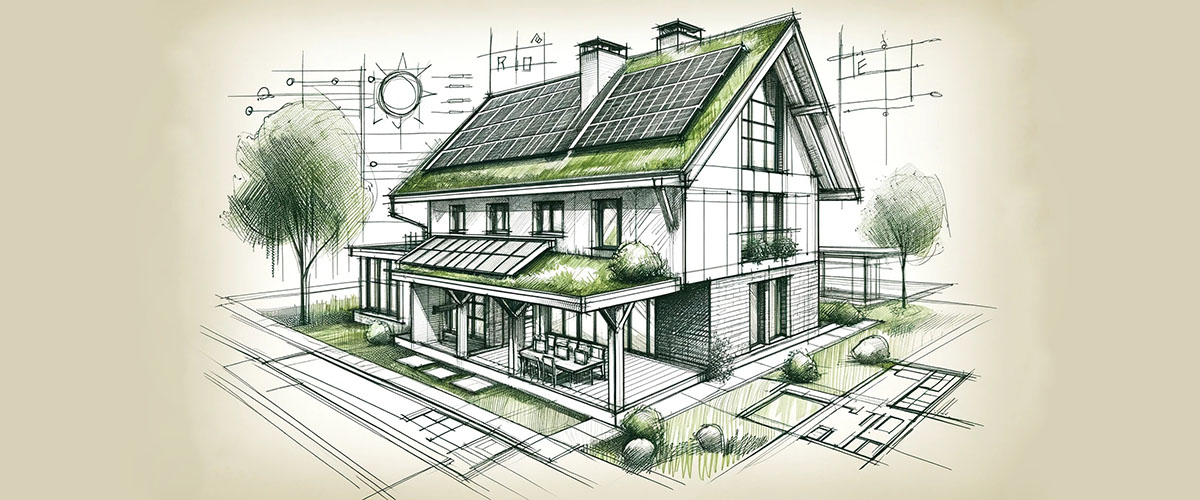
LEED v4.1 Scoring System Structure
LEED v4.1 for Building Design and Construction (BD+C) organizes its credits into seven categories totaling 110 possible points. Certification levels are: Certified (40-49 points), Silver (50-59), Gold (60-79), and Platinum (80 or more). As of March 2024, the USGBC had certified over 180,000 commercial projects in 185 countries, making LEED the most widely adopted green building certification system in the world.
Each category includes mandatory prerequisites (no points awarded, but compliance is essential) and optional credits that earn points. A project cannot achieve certification if it fails a single prerequisite, regardless of accumulated points in other areas.
Location and Transportation (LT) — Up to 16 Points
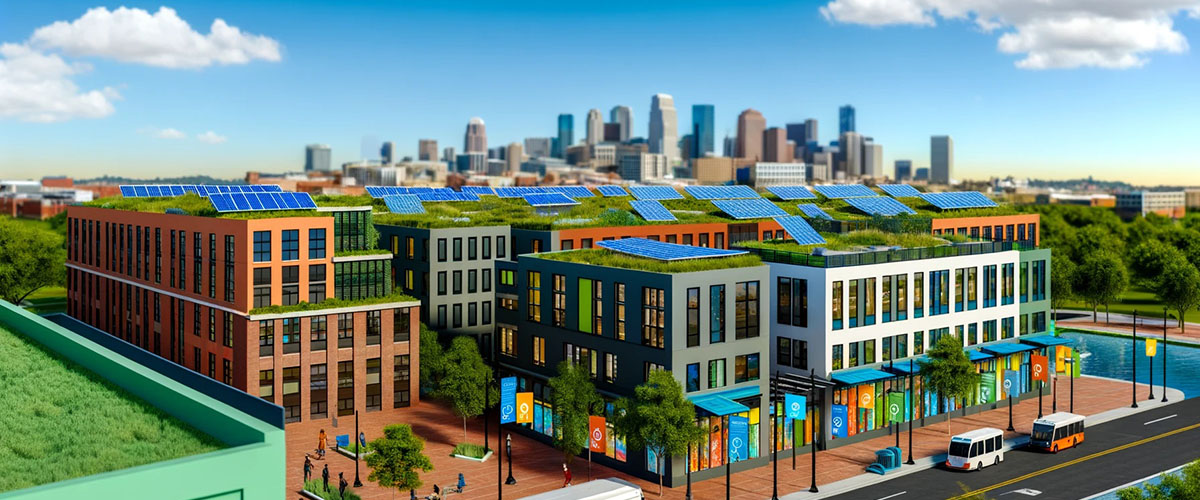
This category evaluates the building's relationship with its urban context. It has no mandatory prerequisites but offers substantial credits for proximity to public transit (up to 5 points if a bus stop is within 400 m or rail/metro station within 800 m), surrounding density and diverse uses (up to 5 points), access to various services, and reduced parking footprint.
Site selection determines up to 15% of the total score. Projects in established urban centers have an advantage over isolated suburban developments. The Bullitt Center in Seattle (2013), certified Living Building Challenge and LEED Platinum, earned maximum LT points by locating in a dense neighborhood with 12 bus routes and 3 streetcar lines within 400 meters.
Sustainable Sites (SS) — Up to 10 Points
LEED requires a Construction Activity Pollution Prevention Plan as prerequisite, compliant with the EPA Construction General Permit 2022 or local equivalent, including erosion, sedimentation, and dust control. Optional credits cover:
Heat island reduction (2 points): requires at least 75% of parking and roof surfaces to use materials with a Solar Reflectance Index (SRI) minimum of 33 for low-slope roofs or 39 for steep-slope, or incorporate vegetation. Rainwater management (3 points): the project must manage the 95th percentile of regional rainfall on-site through infiltration, evapotranspiration, or reuse. Habitat protection (2 points): preserve 40% of existing vegetated area.
Water Efficiency (WE) — Up to 11 Points
The prerequisite requires a minimum 20% reduction in indoor water consumption compared to the baseline calculated per EPA WaterSense. Additional credits reward greater reductions: 25% (1 point), 30% (2 points), up to 50% or more (6 points). Strategies include aerator faucets with flow rates of 5.7 L/min (1.5 gpm) or less, dual-flush toilets at 4.8/3.0 liters, waterless urinals, and greywater reuse systems.
The outdoor water use credit (2 points) rewards complete elimination of potable water irrigation through xeriscaping, native species, or rainwater harvesting. The Salesforce Tower in San Francisco (2018, LEED Platinum) recycles 100% of its wastewater through an on-site treatment system that produces 114,000 liters daily of recycled water for irrigation and toilet flushing.
Energy and Atmosphere (EA) — Up to 33 Points
This is the heaviest-weighted category, representing 30% of the total score. Since the March 2024 update, LEED v4.1 splits the Optimize Energy Performance credit into two components: energy efficiency improvement (up to 9 points) and greenhouse gas emissions reduction (up to 9 points). The minimum energy performance prerequisite was raised from 5% to 10% improvement over ASHRAE 90.1-2010.
Other credits include: Enhanced Commissioning (6 points), requiring verification that all energy systems operate according to design specifications; Renewable Energy (5 points), with thresholds from 1% to 10% of total energy generated on-site; and Demand Response (2 points) for buildings capable of modulating consumption based on grid signals.
Energy modeling per ASHRAE 90.1 Appendix G or ANSI/ASHRAE/IES Standard 90.1 is mandatory. Commonly used tools include EnergyPlus, eQUEST, IES VE, and DesignBuilder. Rigorous modeling from the schematic design phase identifies envelope, HVAC, and lighting combinations that maximize points with minimal additional investment.
Materials and Resources (MR) — Up to 13 Points
The prerequisite requires a construction and demolition waste management plan and use of the Arc platform for data reporting. Credits reward selection of products with Type III Environmental Product Declarations (EPDs) verified per ISO 14025 (2 points), materials with recycled content, regionally sourced materials (extracted and manufactured within 160 km), and products with chain-of-custody certifications such as FSC for wood.
The Construction Waste Reduction credit (2 points) requires diverting at least 50% of waste from landfill, with an additional point for reaching 75%. One Angel Court in London (2017, LEED Gold) diverted 97% of its construction waste from landfill, reusing structural steel from the previous building on the site.
Indoor Environmental Quality (IEQ) — Up to 16 Points
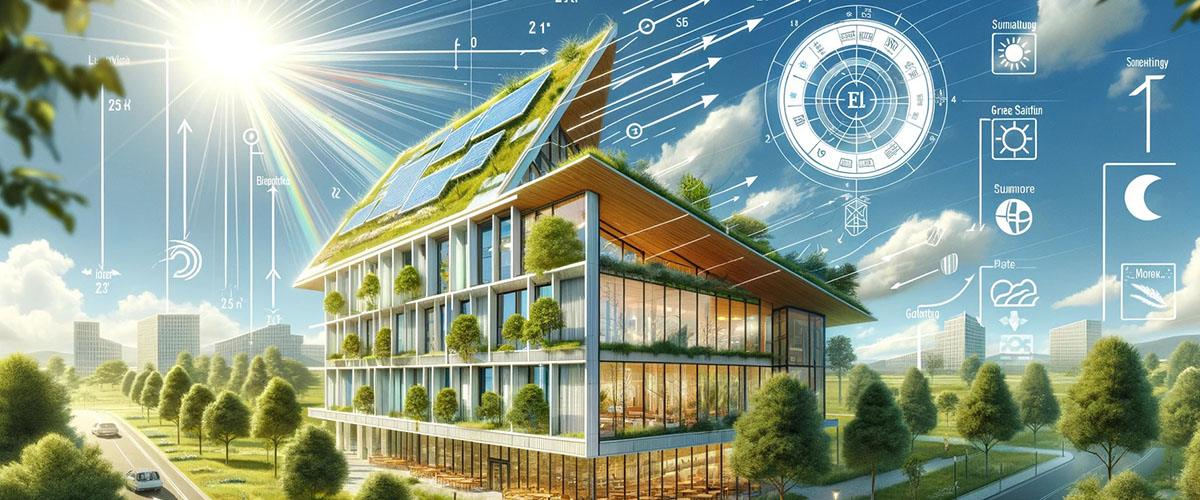
Prerequisites require minimum indoor air quality performance per ASHRAE 62.1-2010 and a smoking ban indoors and within 7.5 m of entrances. Credits cover: Low-emitting materials (3 points) for paints, sealants, adhesives, and carpets with GREENGUARD Gold certification or meeting CDPH Standard Method v1.2 VOC limits; Quality Views (1 point) if at least 75% of occupied area has direct exterior sight lines; Daylight (3 points) if 55-90% of regularly occupied space achieves 300-3,000 lux of simulated natural light.
Thermal comfort is evaluated per ASHRAE 55-2020, defining acceptable conditions for operative temperature, humidity, air speed, and metabolic rate. Radiant floor or ceiling systems combined with dedicated outdoor air systems (DOAS) deliver the best scores for thermal uniformity.
Innovation and Regional Priority (IN + RP) — Up to 11 Points
Innovation (up to 5 points) rewards strategies that exceed existing credit requirements or address aspects not covered by the system. Having a LEED AP BD+C professional on the team earns 1 automatic point. Regional Priority (up to 4 points) are bonus credits that the USGBC assigns by zip code to incentivize responses to local environmental issues: water scarcity, heat island effect, or air quality, among others.
The combination of these additional credits can be decisive: many projects scoring 76-79 points in core categories achieve the Platinum threshold (80) through Innovation and Regional Priority credits.
Integrated Design Strategy
Achieving Gold or Platinum levels requires an Integrated Design Process (IDP) in which architects, MEP engineers, sustainability consultants, landscape architects, and the owner collaborate from the concept phase. The initial sustainability charrette should establish scoring targets by category, identify synergies between credits (for example, a green roof scores points in SS, WE, and EA simultaneously), and define a sustainability budget linking additional investment to expected operational savings.
A World Green Building Council study (2013) demonstrated that additional costs for LEED Gold certification range from 0% to 4% above base construction costs, while operational savings reach 25-35% in energy and 10-15% in water over the first 20 years of operation.
References
- [1]LEED v4.1 Building Design and Construction Rating SystemUSGBC.
- [2]ANSI/ASHRAE/IES Standard 90.1-2019: Energy Standard for Buildings Except Low-Rise Residential BuildingsASHRAE. ISBN: 978-1947192744
- [3]Sustainable Construction: Green Building Design and Delivery (5th ed.)Wiley. ISBN: 978-1119706458
- [4]The Business Case for Green Building: A Review of the Costs and Benefits for Developers, Investors and OccupantsWorldGBC.
- [5]ANSI/ASHRAE Standard 55-2020: Thermal Environmental Conditions for Human OccupancyASHRAE. ISBN: 978-1947192898
Comments 0
No comments yet. Be the first!
Leave a comment