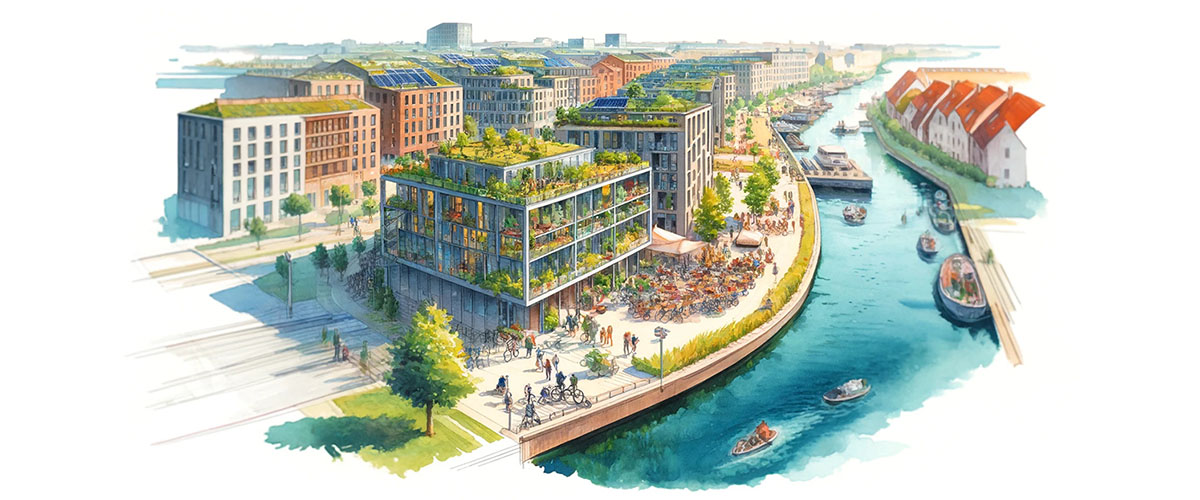
The starting point: the regulatory landscape in 2014
In 2014, when the International Energy Agency (IEA) published its first comprehensive report on sustainable building policies, only 68 countries had some type of mandatory energy efficiency regulation for buildings, and of these, 29 applied it exclusively to new construction (IEA, 2015). The building sector accounted for 30% of global final energy consumption and 28% of energy-related CO₂ emissions, totaling 8.8 billion tCO₂ annually (IEA, 2014). Existing regulation focused on prescriptive requirements (maximum U-values for enclosures, minimum boiler efficiencies) rather than whole-building performance targets. In Europe, the 2010 EPBD had introduced the concept of nearly zero-energy buildings (nZEB) with the mandate that all new public buildings comply from 2018 and all new buildings from 2020, but the nZEB definition was left to each member state, generating thresholds ranging from 20 kWh/m²·year of primary energy in Denmark to 90 kWh/m²·year in Spain, a spread of 4.5 times (BPIE, 2015).
In the United States, the reference standard was ASHRAE 90.1-2013, adopted as the minimum standard by 38 states, with requirements equivalent to a 30% reduction in energy consumption compared to the 2004 version. However, 12 states had no mandatory energy code for residential buildings and 4 lacked any building energy regulation whatsoever (DOE, 2014). China had implemented its energy efficiency design standard (GB 50189-2005), requiring reductions of 50-65% compared to the 1980 reference building depending on climate zone, but the compliance rate was only 53% in new construction according to MOHURD audits (2013). India had the Energy Conservation Building Code (ECBC, 2007) as a voluntary regulation for commercial buildings, with a state adoption rate of 28%. In summary, in 2014, half of the world's new floor area was being constructed without any energy efficiency requirement, 94% of the existing stock was not subject to retrofit obligations, and no country regulated the embodied carbon emissions of construction materials.
The Paris Agreement and regulatory acceleration (2015-2019)
The Paris Agreement (2015) marked a turning point by formally linking the building sector with national climate targets. Of the 196 Nationally Determined Contributions (NDCs) initially submitted, 136 mentioned the building sector as an area of action, but only 47 included quantifiable targets for buildings (GABC, 2016). The Global Alliance for Buildings and Construction (GlobalABC), created at COP21 under the umbrella of UN Environment, promoted the Roadmap for Buildings and Construction that established the goal of fully decarbonizing the sector by 2050, requiring a 30% reduction in emissions by 2030 compared to 2015. Between 2015 and 2019, 32 new countries adopted mandatory building energy efficiency regulations, raising the total from 68 to 100 (IEA, 2020). The EU approved the recast EPBD of 2018 (Directive 2018/844), which required member states to develop long-term renovation strategies to achieve a decarbonized building stock by 2050, with milestones for 2030 and 2040.
Three significant regulatory innovations emerged during this period. First, the appearance of on-site renewable energy mandates: California implemented in 2020 the requirement to install photovoltaics on all new homes (Title 24, Part 6), generating an average capacity of 2.5-4 kWp/dwelling. Second, the regulation of energy ratings as a market condition: France banned the rental of dwellings with a G rating from 2023 (600,000 dwellings affected), and Belgium (Flanders) requires since 2023 that every purchased dwelling reach a D rating within 5 years, affecting 42% of the existing stock (VEKA, 2023). Third, the introduction of life cycle carbon limits: the Netherlands implemented the MPG in 2018 and France enacted the RE2020 (in force since 2022), transforming life cycle analysis from a professional obligation into a verifiable legal requirement. Cumulative public spending on sustainable building policies between 2015 and 2019 was estimated at 180 billion USD globally, of which 58% corresponded to direct subsidies and tax deductions and 42% to preferential financing (IEA, 2020).
The post-COVID decade: acceleration and gaps (2020-2024)
The COVID-19 pandemic and the 2022 energy crisis accelerated green building policies through economic recovery programs with climate conditionality. The NextGenerationEU plan allocated 72 billion EUR to building retrofit and energy renovation across the 27 member states, the largest investment package in building energy efficiency in history (European Commission, 2021). The REPowerEU plan (2022), designed to reduce dependence on Russian gas, included the target of installing 200 GW of solar photovoltaics by 2025 in the EU, with the obligation to incorporate solar panels on all new and existing public buildings over 250 m² by 2027 and on all new residential buildings by 2029. In the United States, the Inflation Reduction Act (2022) allocated 369 billion USD to the energy transition over 10 years, of which 43 billion correspond to tax credits directly applicable to residential and commercial buildings. The number of countries with building energy regulations reached 118 in 2024, covering 80% of new global built area compared to 51% in 2014 (IEA, 2024).
However, the gap between announced policies and measured results persists. The global energy retrofit rate stood at 1% annually of the existing stock in 2023, compared to the 3-3.5% needed to meet Paris targets (IEA, 2024). In the EU, the average rate was 1.2%, with 3 million dwellings retrofitted annually versus the 10 million needed. CO₂ emissions from the building sector reached their historical peak of 10 billion tCO₂ in 2022 before declining to 9.5 billion in 2023, driven by growth in built area in Asia and Africa that more than offsets reductions in Europe and North America (UNEP, 2024). China added 3 billion m² of new floor area in 2023, equivalent to the entire residential floor area of Germany, under a regulation requiring 75% reductions compared to the 1980 baseline but not addressing embodied carbon. The disconnect between 2050 targets (zero emissions) and actual trajectories demands additional regulatory tightening over the next decade that, according to IEA estimates, requires quadrupling the renovation pace and tripling public investment in green building.
Outlook 2025-2035: regulatory convergence and remaining challenges
Regulatory trends are converging toward a global decarbonized building standard integrating four pillars: near-zero operational consumption, limited embodied carbon, mandatory climate resilience, and material circularity. The recast EPBD of 2024 is the most comprehensive regulation: it requires all residential buildings to achieve at least an E rating by 2030 and D by 2033, all non-residential buildings to achieve E by 2027 and D by 2030, new buildings over 1,000 m² to calculate their life cycle global warming potential from 2028, and member states to establish national strategies for a zero-emission building stock by 2050. The USGBC plans to publish LEED v5 in 2025 with 35 credits dedicated to life cycle carbon, aligning the world's most widely used voluntary certification system with the regulatory trend. The ISO 52000 standard, published in 2017 and revised in 2024, provides a harmonized calculation framework for building energy performance that facilitates international comparability.
The remaining challenges are quantifiable. The annual investment needed to decarbonize the global building stock amounts to 1.7 trillion USD through 2050, compared to the current 0.5 trillion, a gap of 1.2 trillion annually (McKinsey, 2022). The training of qualified professionals in low-emission design, life cycle analysis, and deep retrofit is insufficient: the IEA estimates that 4 million additional workers are needed in the energy retrofit value chain in the EU and 10 million globally by 2030 (IEA, 2024). The regulation of the 130 billion m² of existing built area, where 70-80% of the emissions reduction potential is concentrated, advances more slowly than for new construction: only 14 countries have minimum energy performance standards for existing buildings (MEPS), compared to the 118 that regulate new construction. The transition over the last decade has been significant (from 68 to 118 countries with regulations, from 0 to 23 jurisdictions with embodied carbon limits, from 0.3 to 0.5 trillion USD in annual investment), but the pace must accelerate at least 3 times to align the sector with a trajectory compatible with the 1.5°C limit.
References
- [1]Global Status Report for Buildings and Construction 2024IEA / UNEP.
- [2]Building Materials and the Climate: Constructing a New FutureUNEP. ISBN: 978-92-807-4073-0
- [3]Nearly Zero Energy Buildings Across Europe: A Multi-Trend ReviewBPIE.
- [4]Towards Zero-Emission Efficient and Resilient Buildings: Global Status ReportUNEP.
- [5]The Net-Zero Transition: What It Would Cost, What It Could BringMcKinsey Global Institute.
Comments 0
No comments yet. Be the first!
Leave a comment