Impact on Health and Circadian Rhythm
Exposure to natural light regulates the human circadian system through intrinsically photosensitive retinal ganglion cells (ipRGCs), which are most sensitive to blue light (480 nm) present in sunlight. The central biological clock, located in the suprachiasmatic nucleus of the hypothalamus, synchronizes sleep-wake cycles, hormonal secretion, and body temperature in response to this light signal.
A study by Boubekri et al. (2014), published in the Journal of Clinical Sleep Medicine, compared workers with and without windows in offices. Workers with access to natural light slept 46 minutes more per night, had better sleep quality (measured by actigraphy), and reported greater vitality and quality of life. Participants without windows scored 25% lower on the SF-36 health-related quality of life questionnaire.
Deficient daytime natural light exposure is associated with seasonal affective disorder (SAD), affecting 5-10% of the population at latitudes above 40°N (Rosenthal et al., 1984, Archives of General Psychiatry). Light therapy, simulating sunlight's spectral composition at 10,000 lux for 30 minutes daily, is the first-line treatment for SAD according to the American Psychiatric Association.
Productivity and Cognitive Performance
Evidence on the impact of natural lighting on workplace productivity is robust. The seminal Heschong Mahone Group study (2003), commissioned by the California Energy Commission, analyzed 21,000 students in 2,000 classrooms and demonstrated that students with the greatest daylight exposure progressed 20% faster in mathematics and 26% faster in reading over one school year, controlling for socioeconomic and teaching quality variables.
In work environments, a study by Elzeyadi (2011) at the PLEA Conference documented that workers with natural lighting access reported 18% higher perceived productivity and 6.5% less absenteeism. The Impact of Office Design on Business Performance report by the British Council for Offices (2014) estimates the productivity increase associated with good natural lighting between 5% and 15%.
A Harvard University study (Allen et al., 2016, published in Environmental Health Perspectives) measured cognitive functions of workers in conventional offices versus offices with optimized natural lighting and low VOC concentrations. Participants in the optimized environment scored 61% higher in decision-making, crisis response, and strategic planning tasks.
Quantifiable Energy Savings
Artificial lighting accounts for 20% to 40% of total energy consumption in an office building (IEA, 2019). Daylighting strategies combined with automatic dimming controls and occupancy sensors can reduce this consumption by 40% to 75%, according to the Lighting Research Center at Rensselaer Polytechnic Institute.
Daylight harvesting systems use ceiling-mounted photosensors that measure work plane illuminance and automatically adjust luminaire output to maintain a constant level (typically 500 lux for offices per EN 12464-1). At Deloitte's headquarters in Amsterdam (The Edge), certified BREEAM Outstanding with a score of 98.36%, the building's 28,000 sensors regulate artificial lighting individually per workstation, achieving total energy consumption of 70 kWh/m²/year—70% below the Dutch office average.
Impact on Real Estate Value
Natural lighting has a direct impact on property market value. A study by Eichholtz, Kok, and Quigley (2010, published in the American Economic Review) analyzed over 10,000 office buildings in the U.S. and found that green-certified buildings (which typically include strict natural lighting criteria) commanded rental premiums of 3-5% and sale premiums of 16% compared to comparable conventional buildings.
In the residential sector, the Royal Institution of Chartered Surveyors (RICS, 2017) documents that dual-aspect homes (maximizing natural light penetration) achieve prices 5-10% higher than equivalent single-aspect properties. In markets such as London, Barcelona, or New York, this differential can exceed 15% for penthouses and upper floors with exceptional views and natural light.
Benefits for Healthcare Systems
Natural light in hospital settings reduces average patient stays. A classic study by Beauchemin and Hays (1998, published in the Journal of the Royal Society of Medicine) demonstrated that psychiatric patients in rooms with abundant natural light had stays 2.6 days shorter (15.8 vs. 18.4 days) than those in dimly lit rooms. Walch et al. (2005, Psychosomatic Medicine) found that post-surgical patients with more natural light consumed 22% fewer analgesics.
The WELL v2 certification standard from the International WELL Building Institute dedicates its entire L section (Light) to lighting quality, requiring minimum circadian equivalent illuminance levels (EML ≥ 200 at the vertical eye between 9:00 and 13:00) and exterior visual access for at least 75% of workstations.
Glare Control: The Complementary Challenge
Natural lighting benefits only materialize when glare is controlled. The EN 17037:2018 standard (Daylight in buildings) establishes recommended natural illuminance levels (300 lux minimum, 500 lux recommended, 750 lux optimal in 50% of the space) and limits glare probability evaluated through the DGP (Daylight Glare Probability) index, which must remain below 0.35 (Class A, imperceptible) for workspaces with display screens.
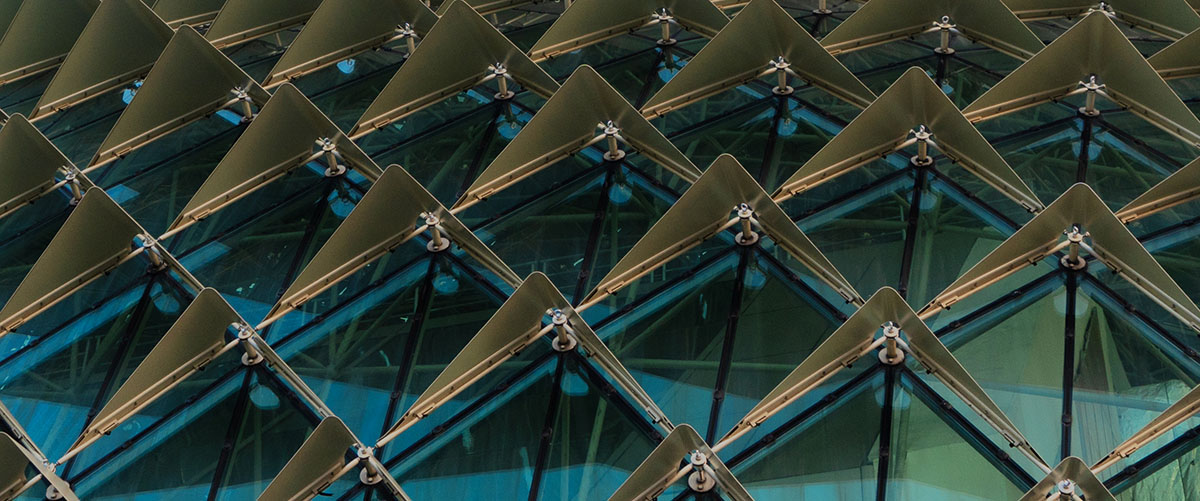
Control strategies include: horizontal overhangs (effective on south facades, depth = H/3 where H is glazing height), adjustable louvers (horizontal on south, vertical on east/west), electrochromic glass (variable transmittance from 1% to 60%, such as SageGlass/Saint-Gobain), and automated low-transmittance curtains. The Seattle Public Library (Rem Koolhaas, 2004) uses a curtain wall with metallic lattice that filters direct radiation while maintaining diffuse illuminance of 300-500 lux in reading rooms.
References
- [1]Impact of Windows and Daylight Exposure on Overall Health and Sleep Quality of Office WorkersJournal of Clinical Sleep Medicine, 10(6), 603-611.
- [2]Windows and Offices: A Study of Office Worker Performance and the Indoor EnvironmentCalifornia Energy Commission, PIER Program.
- [3]Associations of Cognitive Function Scores with Carbon Dioxide, Ventilation, and Volatile Organic Compound Exposures in Office WorkersEnvironmental Health Perspectives, 124(6), 805-812.
- [4]Doing Well by Doing Good? Green Office BuildingsAmerican Economic Review, 100(5), 2492-2509.
- [5]EN 17037:2018 Daylight in buildingsEuropean Committee for Standardization.
- [6]The Effect of Sunlight on Postoperative Analgesic Medication Use: A Prospective Study of Patients Undergoing Spinal SurgeryPsychosomatic Medicine, 67(1), 156-163.


Comments 0
No comments yet. Be the first!
Leave a comment